 Find out what's involved


Event website features: essential tools for smooth event management and stronger attendee engagement
A well-built event website is central to running successful events and keeping attendees engaged.
This guide walks through the must-have features every event site should include — helping organizers and attendees enjoy a reliable, friction-free experience.
You’ll find practical coverage of core functionality, design principles, marketing approaches and analytics tools that increase an event website’s impact.
As technology evolves, robust event management matters more than ever.
This guide breaks down the critical components of an event website — registration systems, integration, UX design, SEO strategies and analytics — and explains how they work together.
What are the core functional features of an event website?
An event website should include a set of core functional features that simplify planning and improve attendee experience.
Key elements are a reliable registration system, seamless integration and engagement tools that streamline workflows and reduce friction.
Knowing how these pieces fit together helps organizers build a more efficient, user-focused site.
How does an event registration system streamline attendee sign-ups?
A modern registration system reduces friction by offering clear, concise forms, secure payments for premium features and automated confirmations.
Online registration cuts manual entry errors, saves time and gives organizers clean attendee data to inform planning and future marketing.
The result is a faster sign-up experience for attendees and better operational control for organizers.
How to design an event website for optimal user experience and mobile responsiveness?
Designing an event website for strong user experience and mobile responsiveness is essential.
A successful site is intuitive, visually clear and performs well across devices.
Below we cover why mobile compatibility matters, practical design practices and accessibility steps that create a positive experience for every visitor.
Why is mobile compatibility crucial for modern event websites?
With more than half of web traffic coming from mobile devices, event sites must be mobile-friendly. Responsive design ensures visitors can navigate, register and buy tickets from phones and tablets without friction.
Mobile compatibility also supports search performance, since search engines prioritize sites that work well on mobile.
What are best practices for event website design and accessibility?
Follow simple design principles to reach a broader audience: keep navigation clear, optimize load times and format content for readability.
Accessibility matters too — include descriptive alt text, support keyboard navigation and test with real users.
Regular user testing uncovers barriers and helps refine the site so it’s inclusive and easy to use.
Which event marketing and SEO strategies enhance event website visibility?
To increase an event website’s visibility, combine content-led marketing, SEO fundamentals and social outreach.
These tactics drive more qualified traffic and help potential attendees discover your event.
How can content and meta data improve event website SEO?
High-quality content and well-crafted meta data help search engines understand your event and improve discoverability.
Use relevant keywords across the site and optimize title tags and meta descriptions to boost click-through rates from search results.
By prioritizing content quality and SEO best practices, organizers can attract a larger, more relevant audience.
What structured data markup should be used for event websites?
Structured data markup gives search engines clear signals about event details — dates, locations and ticket information — and can produce rich snippets in search results.
Implement Event, Offer and Organization schemas where relevant to improve visibility and increase click-through rates.
In short, structured data remains a foundational SEO tactic for modern event sites.
What analytics and reporting features are essential for measuring event success?
Analytics and reporting tools are essential for measuring an event website’s performance.
They reveal how users interact with the site, track registrations and show what’s working — information organizers need to make data-driven decisions.
How do analytics tools track user engagement and registrations?
Analytics platforms monitor metrics such as page views, bounce rates and conversion rates to map user behavior and measure registrations.
Tools like Google Analytics provide detailed reports that help organizers spot trends and optimize marketing and UX based on real user data.
Why is integration with CRM and marketing automation important?
Connecting analytics to your CRM and marketing automation platform streamlines data flow and personalizes outreach.
That integration lets you track attendee interactions, segment audiences and trigger targeted communications, improving engagement and driving higher registration rates.
Research shows that strategic CRM integration can significantly boost the effectiveness of event marketing and overall event management.
What are the best event website templates and builders for efficient setup?
Choosing the right template or site builder speeds launch and reduces technical overhead.
This section highlights popular options and the features that make setup faster and more reliable.
Which features should you look for in event website templates?
Look for templates that offer strong customization, mobile responsiveness and intuitive controls.
Good templates make it easy to add registration and ticketing, and those with built-in SEO settings can improve discoverability straight away.
How do event website builders simplify event creation and management?
Event site builders simplify setup with drag-and-drop editors and prebuilt layouts, so organizers can launch without heavy technical work.
Many builders also include integrations and time-saving features that users praise for speeding up setup and simplifying ongoing management.
Find out how ExpoPlatform can provide your next show with a premium event website.

There's more you might like

Website for an event: essential features you need for your show
A website for an event needs a clear hero section, real-time registration with ticketing, an up-to-date agenda, speaker profiles, sponsor and exhibitor listings, mobile-responsive design and integrated payment processing. Ten essential event website features guide visitors from first click to completed registration, turning a static page into a conversion-focused tool that drives attendee sign-ups and ...
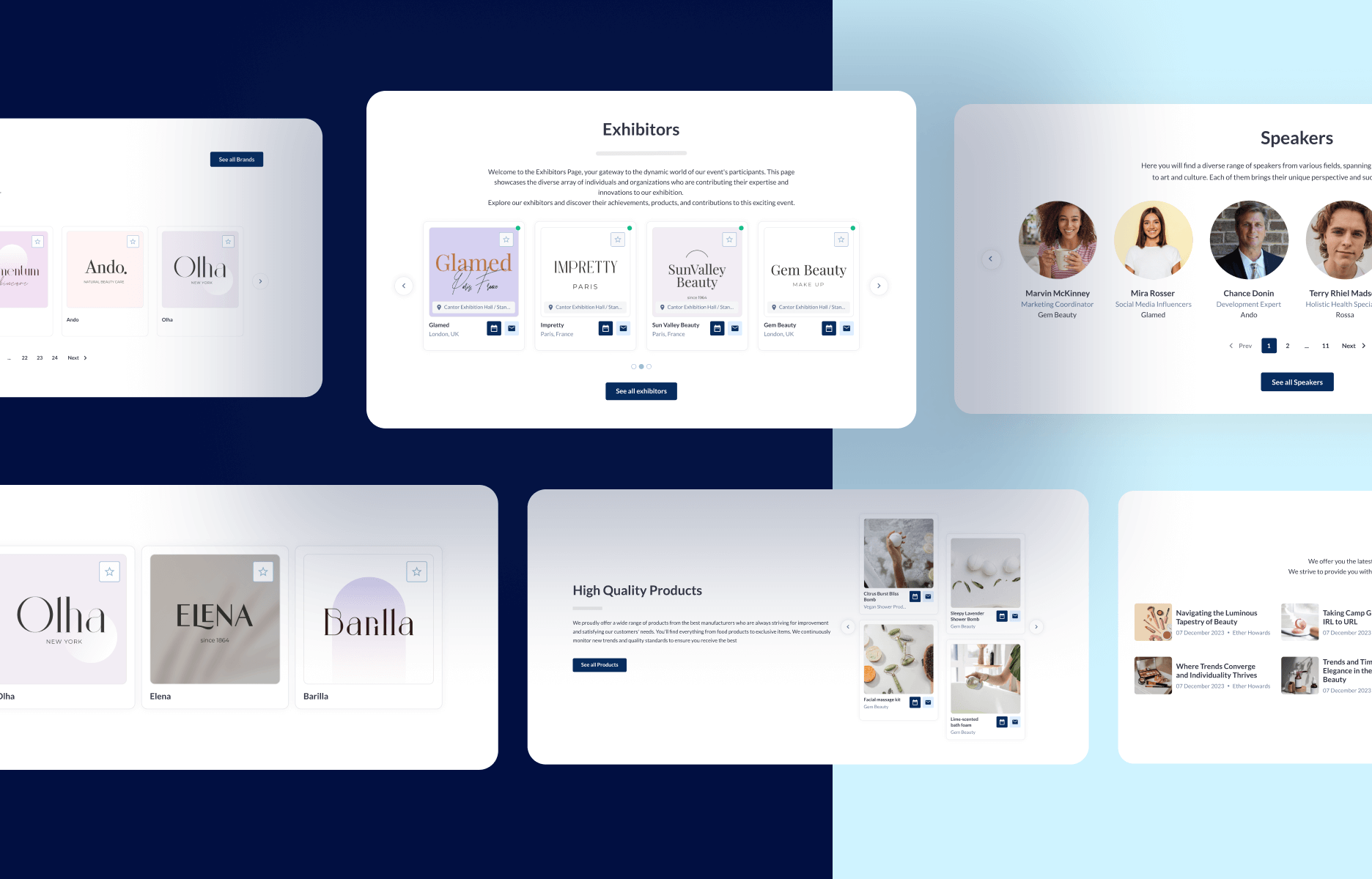
How to build a high-impact tradeshow website in 2026
Tradeshow websites serve multiple purposes. They are a bridge between buyers and exhibitors, a showcase to highlight products and brands and a comprehensive resource for event-related information. In this article, we do a deep dive on how to create a high-impact tradeshow website to get more clicks and conversions for your shows in 2024. Read ...
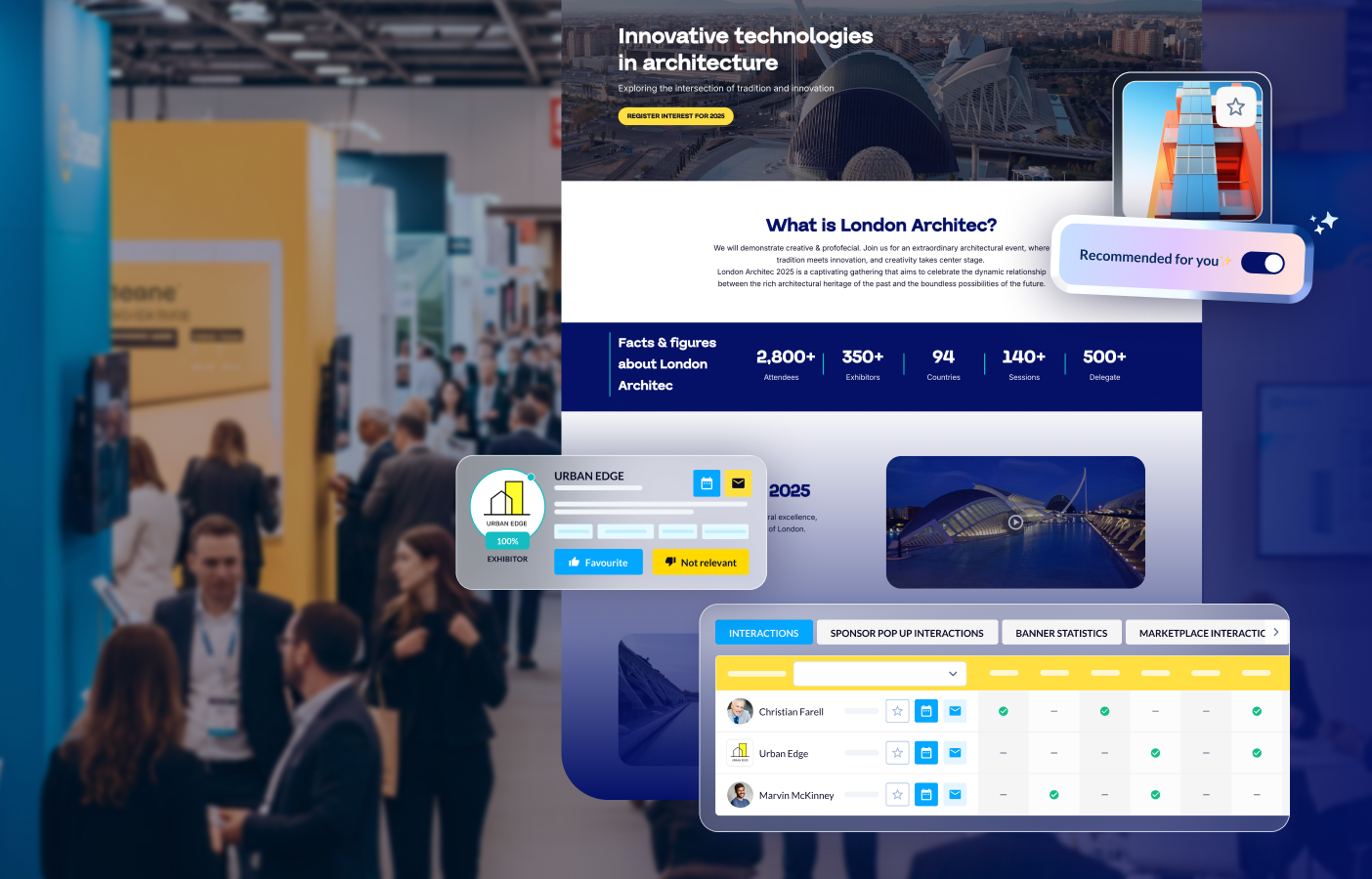
10 ways an event website fosters tradeshow success
Event websites have evolved from digital brochures to all-access information hubs. A feature-rich website now helps tradeshows facilitate buyer-seller connections and close business deals. In this article, you’ll learn the 10 ways a dedicated event website can help tradeshows succeed ⤵️ ? Download our Events Amplified ebook to learn how tools like event website and ...