 Find out what's involved



Why having a great event organizing app matters
An event organizing app provided by platforms like ExpoPlatform handle registration, scheduling and attendee matchmaking automatically – freeing up hours that used to go to manual admin.
Whether you’re running a conference or a large corporate gathering, the right software helps you grow engagement, keep costs in check and know your event worked, rather than hoping it did.
What features should organizers watch for in an event app?
Not every event organizing app is built the same and the strongest platforms share a defined set of capabilities rather than a scattered pile of add-ons.
The list below is what to check before signing a contract, not after.
How do you spot a platform that’s actually built for scale?
Look past the sales pitch and ask how the platform performs when things change fast – a speaker cancels, attendance spikes overnight or a sponsor asks for a last-minute upgrade.
A dependable event organizing app centralizes those updates so every team member is working from the same current data instead of chasing the latest version across inboxes and spreadsheets.
How do you know an app will actually hold up under pressure?
Ask how the platform handles the moments that matter most: on-site check-in during a rush, real-time schedule changes and vendor communication when plans shift without notice.
An event organization app worth choosing removes these bottlenecks by design.
It replaces scattered manual processes with one coordinated system rather than patching gaps as they appear.
What core features belong in an event organizing app?
The strongest event organizing app options share a defined core feature set, not a scattered pile of add-ons.
Miss even one of these pieces and the gap tends to surface at the worst possible moment – mid-registration, mid-check-in or mid-negotiation with a sponsor.
Which features actually matter for lead capture and registration?
Lead retrieval and registration tools sit at the center of any dependable event organization app.
Advanced lead retrieval lets exhibitors collect prospect data on-site without paper forms or manual entry, while optimized registration removes friction for attendees signing up.
Built-in data capture and analysis then turns that registration activity into usable insight once the event closes.
Beyond registration, a complete platform needs to handle logistics and revenue in one place:
- Clear meeting scheduling for attendees, exhibitors and speakers
- An exhibitor manual to keep vendors informed on setup and rules
- Monetization options for selling sponsorships, booths or upgraded packages
- A mobile app for on-the-go access to schedules and updates
- An event website that serves as the public-facing hub for the entire event
Does branding and customization make a real difference?
Customization and white labeling matter more than many small business owners expect.
A platform that lets organizers apply their own branding across the event website and mobile app keeps the experience consistent and professional, rather than looking like a generic third-party tool.
Pair that with an exhibitor, sponsor and product directory and attendees get a clear way to browse offerings – which strengthens the value organizers can promise sponsors.
Ultimately, the purpose behind this feature list is consistency.
A well-built app streamlines the experience before the event opens, keeps things running during live sessions and supports follow-up once doors close.
Coordinators evaluating software should treat that three-phase coverage pre-event, live and post-event-as the real test of whether a platform earns a spot in their toolkit.
Checkout our mobile event app checklist to find out more.
Can an an event organizing app actually improve attendee engagement?
An event organizing app improves attendee engagement by enabling smooth, real-time interaction between attendees, speakers and organizers.
Event organizers who skip this technology risk fragmented participation, missed connections and attendees who log off early or wander away from booths.
The right platform closes that gap by structuring communication instead of leaving it to chance.
Modern event platforms let organizers build accessible, scalable experiences that remove geographic limits and expand audience reach far beyond a single venue’s capacity.
A small business owner running a regional conference suddenly has access to attendees who never could have traveled in.
Engagement, though, depends on more than connection tools alone.
Capturing attendee interactions through event data analytics turns raw activity into actionable insight.
Instead of guessing what worked, organizers can see clear patterns behind session attendance, networking behavior and drop-off points.
What makes engagement data useful, not just interesting?
Data only becomes useful when it changes decisions.
Tracking interactions and system events gives coordinators a factual basis for adjusting session length, format or speaker lineup before the next event.
Consider the practical gains – real-time interaction between speakers and attendees regardless of location, expanded reach without added venue or travel costs, actionable insight from captured engagement data and improved decision-making for future event design.
What event organizing apps are organizers already relying on?
Most event organizers already lean on a patchwork of single-purpose tools rather than one unified system.
Ticketing platforms dominate this landscape, giving organizers a way to create event pages, promote gatherings and manage RSVPs without building anything from scratch.
That popularity shows how central ticketing and promotion have become to daily planning work, even before a broader event organizing app enters the picture.
Beyond ticketing, the app market splits by task rather than by platform.
Organizers often assemble a toolkit piece by piece, choosing apps based on the specific problem each one solves.
What types of event apps do organizers use most?
Organizers commonly rely on tools grouped by use case, since in the past no single app handles every job well.
Common categories include ticketing and promotion tools for selling tickets and managing guest lists, venue and logistics calculators for capacity.
Staffing and catering estimates, task and workflow trackers for keeping deadlines and vendor communication organized.
This division by use case lets small business owners and coordinators pick tools that shave time off narrow, repetitive tasks, instead of forcing one system to do everything.
Is using separate apps enough for modern events?
Relying on scattered apps covers individual tasks but leaves gaps between them.
Effective planning today takes more than sharp decision-making or negotiation skill – it takes genuine comfort with digital tools across the whole event lifecycle.
Organizers who stick with disconnected point solutions risk losing visibility across registration, promotion and attendee engagement.
A dedicated event organization app consolidates those functions – closing the coordination gaps that a toolkit of separate apps tends to create.
How should you choose the right platform?
Choosing the right platform starts with one core decision: an all-in-one system or a tool built to integrate with software already in use.
Event organizers weighing an event organizing app face this fork early and the wrong turn creates duplicate data entry, disconnected registration records and wasted staff hours down the line.
Event management platforms exist to make the exhibition process seamless from start to finish.
Some solutions bundle registration, ticketing, marketing and on-site check-in into one dashboard.
Others prioritize easy integration with a CRM, payment processor or marketing suite an organization already trusts.
Neither approach is universally better; the right fit depends on existing infrastructure and team size.
What extra features separate strong platforms from basic ones?
Strong platforms go beyond the core checklist of registration and ticketing.
The best exhibition platforms offer sub-features and additional technology that extend value well past launch day.
Consider these differentiators when comparing an event organization app against competitors: networking and matchmaking tools for attendees and exhibitors, analytics dashboards that track engagement rather than just headcounts and custom branding options for event pages and mobile apps.
Does the provider’s background matter?
A provider’s background signals long-term reliability.
Stable, well-located providers tend to offer steadier support and clearer accountability.
Before signing a contract, organizers should confirm which capabilities matter most for their events, then measure any platform against that list rather than marketing claims alone.
Event organizing apps have changed how organizers handle the logistics and coordination that used to eat up their week.
By centralizing workflows, automating routine tasks and giving teams real-time visibility into every moving part, these platforms cut out the inefficiencies that once ate into planning time and budget.
For organizers focused on delivering strong events without burning out their team, the right event management technology has moved from a nice-to-have to a practical necessity.
FAQ
Why is an event organizing app important for event planning?
It centralizes workflows that manual planning scatters across spreadsheets, emails and phone calls – automating registration, scheduling and attendee matchmaking while cutting administrative hours.
Why does manual event planning fall short compared to using an app?
Spreadsheets and email chains scatter information and buckle under real-time changes like vendor swaps or last-minute registrations.
An app centralizes updates and gives every team member one reliable source of truth.
What core features should an event organizing app include?
A dependable event organizing app centers on advanced lead retrieval and optimized registration, letting exhibitors collect prospect data on-site without paper forms while removing friction from the registration process.
If you want more information how to apply your event app at your show download this handbook or book a demo here.
There's more you might like
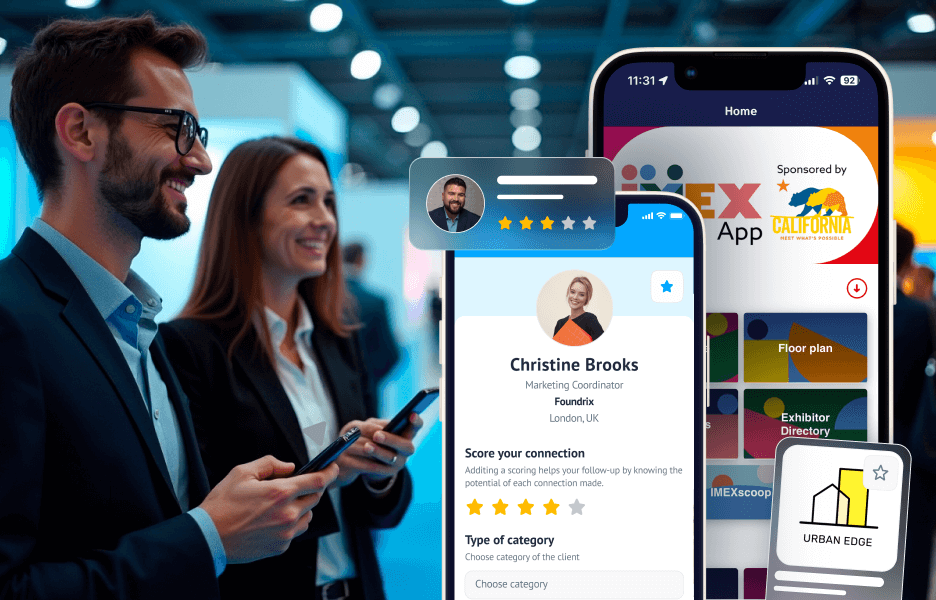
Event organizer mobile app: what are the essential features?
An advanced event organizer mobile app is key to extending your live shows into the digital space. They empower visitors to connect, share content and retrieve leads in real-time. This is the true hybrid experience – in-person connection, enhanced by technology. This guide will explore the main features: Highlight your brand and key messaging on your ...
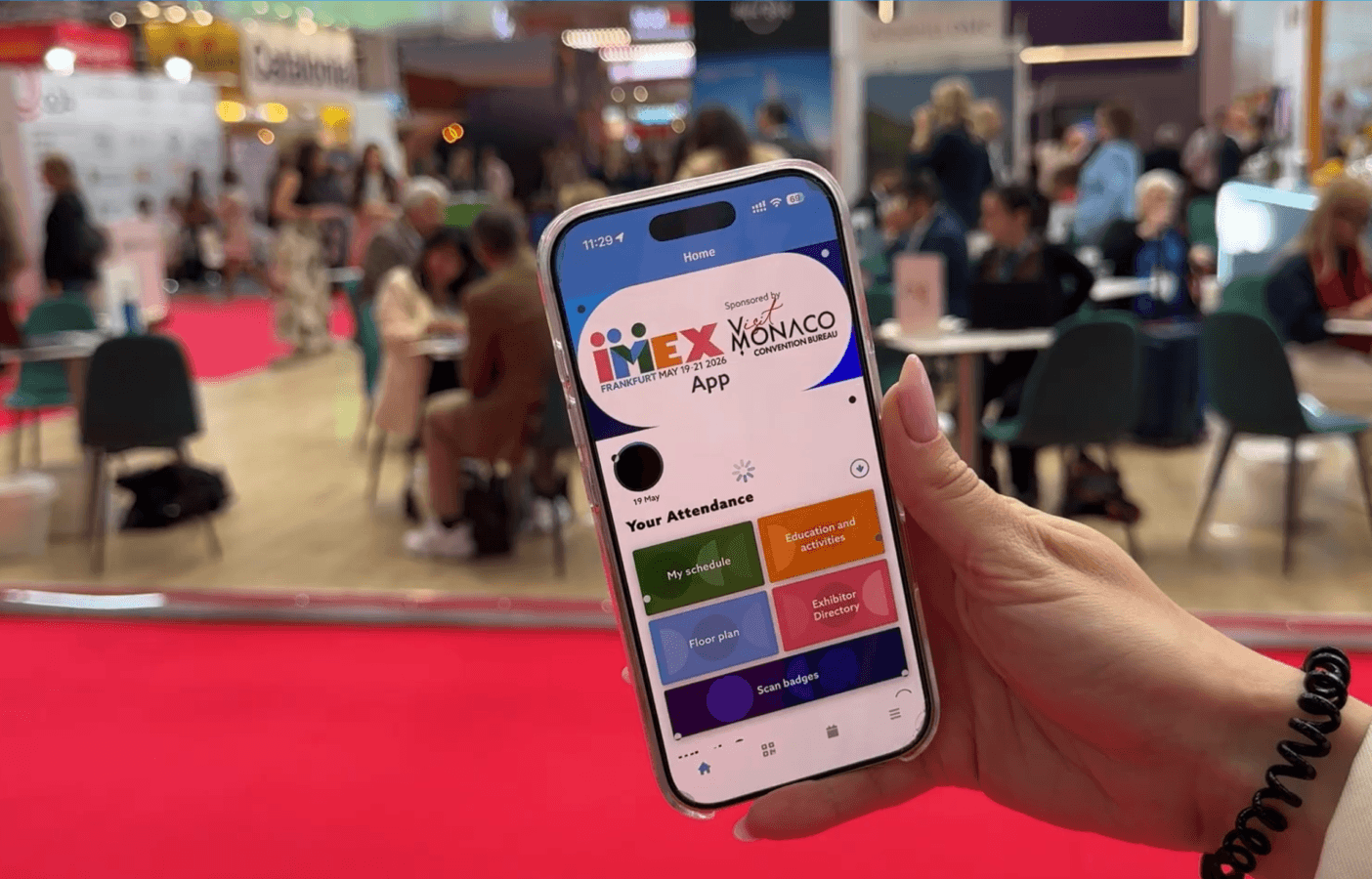
Event app features: must-haves vs. nice-to-haves to maximize engagement and efficiency
In today’s fast-moving events landscape, the features you choose for your event app can make or break attendee engagement and overall success. This article lays out the essential and optional capabilities event planners should weigh when selecting tools—so you can prioritize what truly moves the needle. Knowing the difference between must-haves and nice-to-haves is key ...
Event app features: what to prioritize
Effective event mobile apps combine native performance, real-time schedule updates, interactive maps and networking tools that replace scattered PDFs and static websites. Strong platforms integrate registration, session tracking and matchmaking in one system. Organizers should prioritize apps built for engagement, not just information display. Key takeaways Event apps transform attendee phones into engagement tools, replacing ...