 Find out what's involved


Event app features: what to prioritize
Effective event mobile apps combine native performance, real-time schedule updates, interactive maps and networking tools that replace scattered PDFs and static websites. Strong platforms integrate registration, session tracking and matchmaking in one system. Organizers should prioritize apps built for engagement, not just information display.
Key takeaways
- Event apps transform attendee phones into engagement tools, replacing social media distractions with schedules and maps.
- Personalized mobile experiences deliver content, networking and navigation features that drive meaningful member engagement.
- Real-time updates keep attendees informed about sessions, changes and opportunities throughout your event.
- Customizable app design accommodates events of any type or size, supporting your specific audience preferences.
Why does your event app matter now?
Attendees check their phones constantly throughout a conference or trade show. Every glance at that screen is a choice: the event schedule or a social feed. When the mobile experience fails to deliver, organizers lose that moment of attention to something unrelated to the event entirely.
Strong event app features change that equation. A well-designed app turns a distraction-prone device into a genuine engagement tool, placing schedules, venue maps, networking tools and real-time updates in one accessible place. Attendees stop hunting for information and start using it.
Buyer expectations have shifted toward mobile-first planning. Mobile tools are no longer a nice-to-have add-on; they are becoming the expected standard for professional events, covering event planning, execution and communication in one place.
Does an event app actually affect ROI?
Yes, though the evidence worth trusting is event-specific rather than industry-wide. Ask any provider for outcomes from named events at a scale comparable to yours: exhibitor lead volume, the share of exhibitors who actually used the app and the number of meetings it generated. Vendor-published figures are self-reported rather than independently audited, so a named event is the minimum credibility test. An unattributed industry percentage tells you nothing about whether an app will perform at your show. The case studies later in this article show what that evidence looks like in practice.
What should organizers prioritize when evaluating options?
Reliability and clarity matter more than flashy extras. Consider these priorities:
- Real-time updates that reach attendees instantly during schedule changes
- Intuitive navigation so attendees find sessions without frustration
- Integrated networking tools that connect attendees with shared interests
- Consolidated information replacing scattered emails, PDFs and printed programs
Choosing the right event app software determines whether attendee attention stays with the event or drifts elsewhere.
Which core features should you prioritize?
Five capabilities separate genuine platforms from stripped-down scheduling tools: lead retrieval, registration, data capture, meeting scheduling and monetization. Event planners weighing event app features should treat this list as a baseline, not a wish list. Missing even one creates friction for exhibitors, attendees or the finance team tracking sponsorship revenue.
The strongest platforms don’t stop at the basics. They layer in sub-features and supplementary event app software that deepens engagement for both attendees and exhibitors. Think enhanced networking tools, interactive floor maps or expanded reporting dashboards. These additions separate a functional app from one that actively drives ROI.
What makes event app tech worth the investment?
Value comes from lifecycle coverage, not showday flash. A strong provider streamlines the experience before, during and after the event, connecting pre-event registration data to onsite engagement and post-event follow-up. That continuity is the real measure of event app tech quality. It determines whether organizers spend the weeks after an event chasing scattered data or working from a single, connected dataset.
Native app or mobile website – does it matter?
It matters more than most buyers expect. Some products marketed as event apps are true native applications; others are mobile-optimized web pages styled to look native. Native apps generally perform better offline, load faster and integrate more reliably with device features like push notifications and cameras for badge scanning.
Trade show directors and conference organizers should confirm which type they’re evaluating before comparing pricing or feature lists. A quick comparison helps clarify priorities:
How does event data shape app value?
Event data determines how much value a mobile app delivers to organizers long after the closing session ends. Registration numbers, session attendance and networking activity turn a simple schedule tool into a strategic asset for planning future events. Without that data layer, even polished event app software functions as little more than a digital brochure.
More data brings more responsibility, though. Rising volumes of attendee information give organizers sharper insight into behavior and preferences. That same growth raises real questions about compliance and security that event leaders cannot ignore.
What should organizers do with event app data after the event ends?
Session attendance, engagement scores and networking patterns should flow directly back into planning workflows, not sit unused in a dashboard. This is where strong event app tech earns its budget line. Organizers who close that loop build measurably better experiences year after year.
The strongest platforms support this cycle through:
- Centralized dashboards tracking attendance and session popularity
- Secure handling of attendee data to meet compliance standards
- Reporting tools that translate engagement data into planning decisions
These event app features turn raw numbers into a repeatable strategy, giving trade show directors and conference organizers a clear edge event over event.
What skills do organizers need to manage event apps?
Digital fluency ranks as the core requirement for organizers managing mobile event software today. Decision-making and negotiation skills still matter, but they no longer carry an event on their own. Modern audiences expect a mobile-first experience and delivering that experience demands comfort with the digital tools behind it.
Speed matters as much as skill. Organizers who delay learning their chosen event app tech fall behind on execution. Last-minute troubleshooting during a live event costs far more than early preparation. Teams that get familiar with their platform quickly build the confidence to adjust schedules, push updates and solve problems before attendees notice.
Do organizers need to be technical experts to run an event app?
No. Organizers need working familiarity with the platform, not engineering-level expertise. The priority is knowing how event app features function well enough to configure them and troubleshoot on the spot.
What matters more: the technology or the event strategy?
Neither works alone. Strong event app software only delivers value when paired with clear goals for the event itself. The underlying purpose never changes:
- Resonate with the audience through relevant, timely content
- Engage target customers in ways that feel personal, not generic
- Add measurable value for stakeholders and sponsors
The tools evolve; the desired outcomes hold steady. Organizers who pair digital fluency with these fixed goals position their events to perform.
How do you choose the right app platform?
Selecting the right platform starts with matching software capability to event goals, not chasing the longest feature list. A well-matched platform lets planners build accessible, scalable experiences and expand overall event reach.
Corporate event leaders should weigh three factors before committing to a vendor:
- Scale of operations – enterprise programs need infrastructure built for high attendee volume and multiple simultaneous sessions.
- Frequency of events – associations and universities running programs year-round benefit from tools optimized for recurring, smaller-scale use.
- Brand presentation – the platform should keep the primary brand name used consistently throughout all communications, reinforcing recognition across every touchpoint, from push notifications to session listings.
What should organizers look for in event app features?
Strong event app features center on usability under pressure: real-time schedule updates, intuitive navigation and networking tools that actually get used on-site. Trade show directors should prioritize platforms that simplify complex agendas rather than add friction. Feature depth matters less than whether attendees can find what they need in seconds.
Does company size matter when selecting an event app?
Company size shapes the right fit more than most planners expect. Massive enterprise operations require different event app tech than universities or associations running frequent, smaller events. There is no single best solution. The right choice depends entirely on what an organizer is trying to accomplish, making goal clarity the real starting point of any platform search.
Are ExpoPlatform and Cvent market leaders?
Both platforms sit at the top of the event technology market, though they lead from different ends of it. Cvent leads on enterprise scale. The company reports 34,000+ customers, 8 million+ events managed on the platform and use by 89% of the Fortune 100, alongside 5,500+ employees and 445,000+ active users. It has also been named a Leader in the Gartner Magic Quadrant for Event Marketing and Management Platforms three years running, from 2024 to 2026. Blackstone acquired the business in a $4.6 billion transaction and Cvent has committed $1 billion+ to product innovation across July 2026 to July 2029.
ExpoPlatform leads on the exhibitions and trade show side, where its position is measured by the organizers running on it rather than by analyst placement. Informa, Hyve, Messe Frankfurt, Comexposium, BolognaFiere, dmg events, IMEX Group, Messukeskus and Dubai World Trade Centre all deploy the platform and it delivered 95,000+ meetings across three editions of Shoptalk alone.
Organizers comparing the two should note the asymmetry in that evidence. Cvent holds formal analyst recognition in the event marketing and management category, while ExpoPlatform’s standing rests on adoption by major exhibition organizers and on published deployment volumes. Neither type of proof substitutes for the other.
How do the two platforms compare on features and positioning?
| Dimension | ExpoPlatform | Cvent |
| Primary market | Exhibitions, trade shows and large B2B shows | Corporate meetings, conferences and enterprise event programs |
| Mobile app product | Smart Event Mobile App, including a container app grouping multiple shows under one umbrella | Attendee Hub Event App, a native app tied to the wider Cvent platform |
| Networking and matchmaking | AI matchmaking plus a swipe-based “Product Tinder” view for product discovery | AI-powered networking recommendations based on attendee attributes and behavior |
| Meeting scheduling | Hosted buyer and concierge meeting programs with appointment tools | 1:1 appointment scheduling with attendee messaging |
| Lead capture | Badge and QR scanning with contact rating, notes and a real-time exhibitor dashboard | Lead capture with booth visit tracking and engagement scoring |
| Floor plan and wayfinding | Customizable interactive floor plan with filtering, plus integration with ExpoFP | Event maps within the app |
| In-app monetization | Premium exhibitor profiles, mobile banner ads and interactive splash screens | Rotating brand awareness ads and rich digital booths |
| Session engagement | Content sharing, QR-unlocked product content and analytics dashboards | Live Q&A, polls, surveys, chat, discussion threads and gamification challenges |
| AI in the app | Product and people matchmaking | Networking recommendations, AI-generated daily summaries and AI session feedback summaries |
| Adjacent modules | Registration, event website builder, lead intelligence and organizer analytics | Registration, OnArrival check-in and badging, Passkey room blocks and a venue sourcing marketplace of nearly 340,000 venues |
| Third-party rating signal | 4.3 out of 5 on Capterra across 20 reviews | Reviewed across G2 and Gartner Peer Insights, with Gartner Magic Quadrant Leader placement 2024-2026 |
| Published entry price | From $6,000, usage-based, per Capterra | Not publicly listed; quoted per program |
Feature lists overlap heavily at the top. The separation shows up in what each platform treats as the primary unit of value: exhibitor lead volume in one case, program-wide attendee data in the other.
Where does each platform fit?
Use cases diverge more sharply than feature lists do. Each platform is built around a different event shape, which changes what its app is optimized to do on the floor.
Which use cases suit ExpoPlatform?
ExpoPlatform is built for exhibitor-driven events where the commercial outcome is measured in qualified leads and booked meetings. Typical deployments include:
- Large-scale trade shows spanning multiple halls or venues, where wayfinding across a complex floor plan is a core attendee need.
- Hosted buyer programs that require concierge meeting scheduling between pre-qualified buyers and exhibitors.
- Multi-show portfolios run by a single organizer, using one container app to group several editions or brands together.
- Exhibitor ROI reporting, where badge scanning feeds a real-time dashboard that exhibitors can act on during the show.
- Sponsorship inventory inside the app itself, sold as premium profiles, banner placements or splash screens.
Which use cases suit Cvent?
Cvent is built for organizations running a high volume of recurring events as part of a wider marketing or internal communications program. Typical deployments include:
- Corporate conferences and user events where the app carries personalized agendas, speaker detail and session engagement tools.
- Enterprise event programs that need registration, check-in, badging and app data flowing into a CRM such as Salesforce.
- Venue sourcing at scale through the Cvent Supplier Network, which processes millions of RFPs annually.
- Incentive trips and internal meetings, where the app distributes itineraries and last-minute changes to a defined group.
- Vendor consolidation, replacing several separate tools with one platform across an events calendar.
The practical test for organizers is simple. Events whose revenue depends on exhibitors and lead volume pull toward the first list. Events whose value depends on program-wide attendee data and CRM continuity pull toward the second.
What do published case studies show?
Vendor-published case studies are marketing material, so the figures below are self-reported by each provider rather than independently audited. They still indicate what each platform is used to achieve, because the metrics each vendor chooses to publish reveal what its customers were buying it for.
Which ExpoPlatform case studies show mobile app impact?
GITEX Global, Dubai World Trade Centre. The 43rd edition drew 187,000 attendees and 6,000 exhibitors across 41 exhibition halls in two venues. ExpoPlatform supplied the mobile app, lead intelligence, interactive floor plan with wayfinding and hosted buyer meeting tools. Reported outcomes: 60,000+ app downloads, 698,000+ unique lead scans and 12,000+ concierge meetings arranged.
Pharmapack Europe, Informa Markets. A two-day pharmaceutical packaging show in Paris with 5,000+ attendees and 300+ exhibitors, running digital badges in place of physical ones. Reported outcomes: a 258% increase in unique exhibitor leads on average, 84% of exhibitors actively using the mobile app and 29,177 scans recorded through it.
“ExpoPlatform are a key Informa Markets partner because they share our vision of applying innovative technologies.” – Eleni Lialiamou, EVP Product Management, Informa Markets
Which Cvent case studies show mobile app impact?
Cognizant. The technology services firm attributes 65% of client engagement to its marketing events program. It runs Attendee Hub alongside registration, OnArrival check-in with RFID and NFC badging, Passkey room blocks and custom Salesforce integrations. Reported outcomes: 14,800+ registrations managed, a 70% reduction in manual work, a 90% increase in event data captured in Salesforce, a 65% improvement in event data health and a 96% audience retention rate.
FUSION Performance Group. The third-party planning company deployed the Attendee Hub native app so attendees could build their own agenda, view session and speaker detail and receive push notifications, with polling, chat, Q&A and embedded surveys layered on top. Reported outcomes: 485 events managed on Cvent, 35,000+ registrations, a 75% conversion rate and 150+ events in a single year, against 20-30% annual organic growth for the business.
Read side by side, the two sets of numbers answer different questions. ExpoPlatform’s published metrics quantify exhibitor lead generation and meeting volume. Cvent’s quantify operational efficiency, data quality and registration throughput. Organizers should compare each set against the outcome their own event is judged on, not against each other.
FAQ
What core features should an event app include?
Look for real-time updates, intuitive navigation, integrated networking tools and consolidated information that replaces scattered emails, PDFs and printed programs. Strong platforms also combine lead retrieval, registration, data capture, meeting scheduling and monetization capabilities.
How does an event app improve attendee engagement?
A well-designed app turns phones into engagement tools by placing schedules, venue maps, networking tools and real-time updates in one accessible place. This stops attendees from hunting for information and keeps their attention on the event instead of social feeds.
Does investing in an event app deliver measurable results?
Yes, at the level of individual events. At Pharmapack Europe, unique exhibitor leads rose 258% on average, with 84% of exhibitors actively using the mobile app. Figures like these are vendor-reported rather than independently audited, so organizers should ask any provider for named-event evidence rather than accepting industry-wide percentages.
Conclusion
In closing, selecting the right event mobile app requires prioritizing features that directly enhance attendee engagement and streamline operational efficiency. The most effective platforms integrate real-time networking capabilities, intuitive navigation and robust analytics to measure event success. By evaluating these core functionalities against your specific organizational goals, you position your event for meaningful attendee experiences and measurable business outcomes. The investment in a thoughtfully chosen mobile app ultimately transforms how your audience connects, learns and engages with your event ecosystem.
Download the Event App Handbook for the full feature checklist, or ask for a demo here.

There's more you might like
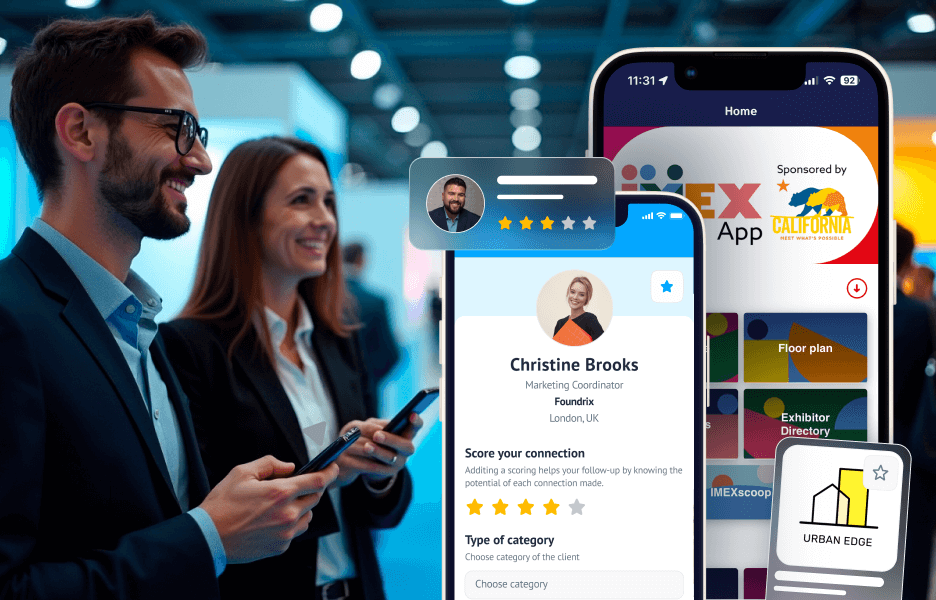
Event organizer mobile app: what are the essential features?
An advanced event organizer mobile app is key to extending your live shows into the digital space. They empower visitors to connect, share content and retrieve leads in real-time. This is the true hybrid experience – in-person connection, enhanced by technology. This guide will explore the main features: Highlight your brand and key messaging on your ...
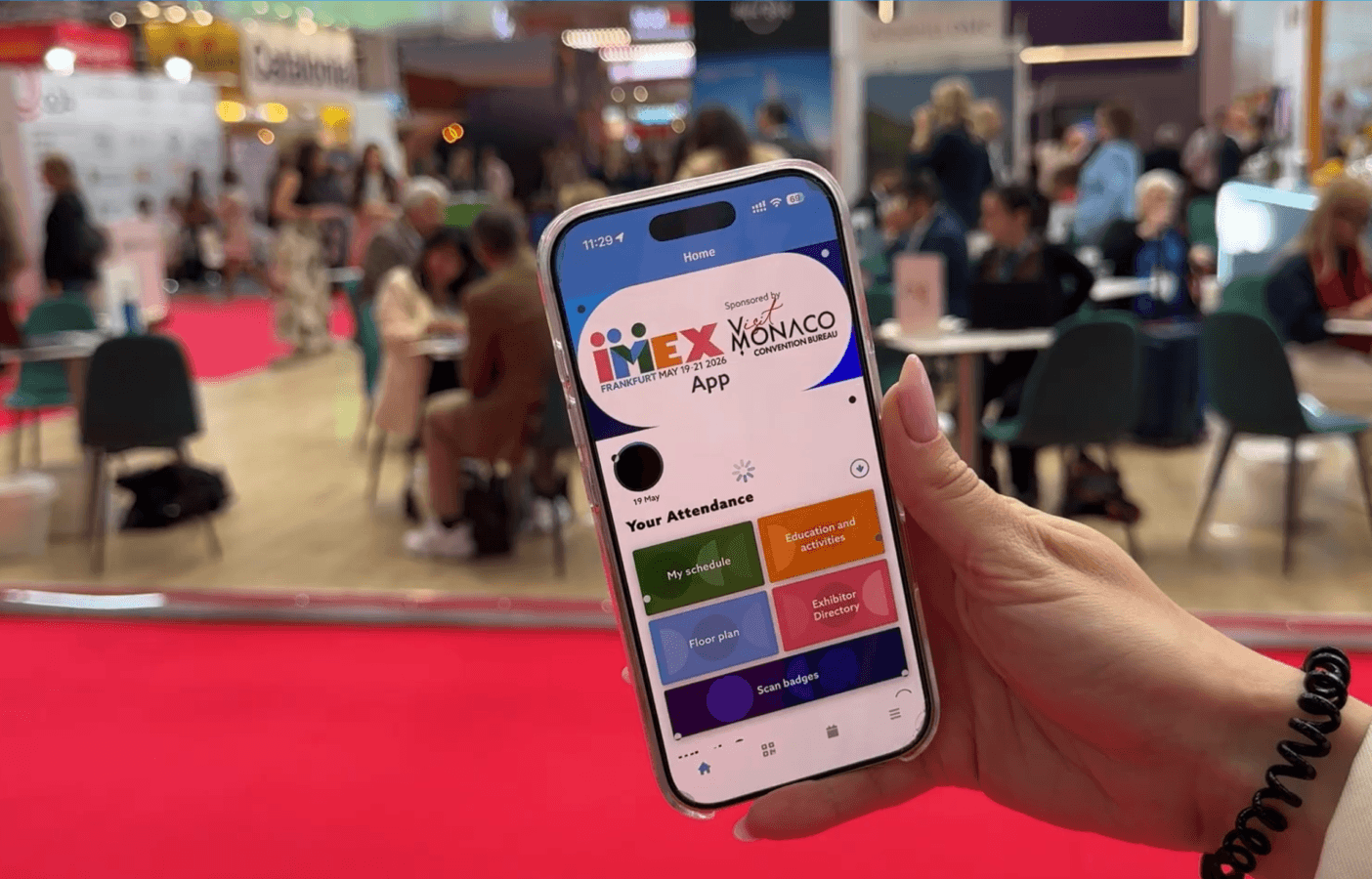
Event app features: must-haves vs. nice-to-haves to maximize engagement and efficiency
In today’s fast-moving events landscape, the features you choose for your event app can make or break attendee engagement and overall success. This article lays out the essential and optional capabilities event planners should weigh when selecting tools—so you can prioritize what truly moves the needle. Knowing the difference between must-haves and nice-to-haves is key ...

Why having a great event organizing app matters
An event organizing app provided by platforms like ExpoPlatform handle registration, scheduling and attendee matchmaking automatically – freeing up hours that used to go to manual admin. Whether you’re running a conference or a large corporate gathering, the right software helps you grow engagement, keep costs in check and know your event worked, rather than ...