 Find out what's involved


EXPOPLATFORM EBOOK
The Meetings Engine
This is your complete guide on how to design productive meetings, format by format.
Get your free copy now by filling in the form.
Get the ebook & unlock your AI overview
Fill in your details to download the PDF and reveal the page below.

What are you particularly interested in? ✨ Get your AI overview now
Tick the topics you care about for a tailored summary with key insights from the ebook – stats, quotes and charts included.
Would you like a consultation on meetings and event tech?


The Meetings Engine
fuels a business-driven event
00
Executive summary — from the CEO
The way we run meetings at exhibitions has to change.
Every event organiser I’ve spoken to in the last twelve months has said some version of this. Sometimes it’s a comment about exhibitor churn. Sometimes it’s frustration that the data from last year’s show didn’t tell them what they needed to know. Sometimes the conversations they wanted to be delivering didn’t happen and they’re not sure why.
What they’re describing is a category problem, not an individual one. The exhibition industry built its meeting practices in an era when the tools to design them didn’t exist. We inherited a default – open networking, plus whatever bookings happen to get made on the side – and we’ve spent decades optimising around its limits.

But the tools exist now. A recent survey we ran confirms what most of us already feel: 91% of organisers are planning to introduce new meeting formats in the next twelve months.
That’s not a trend. That’s a category-wide repositioning and it’s happening now.
What this ebook covers
This ebook aims to help organisers navigate that shift with clarity. It draws on what we’ve learned from running meetings programmes with some of the world’s leading exhibition organisers. It draws on the building of AI infrastructure that makes multi-format meetings viable at scale. It also draws on the experience of a senior team that has spent careers on the organiser side of the table before joining ours.
You’ll find seven meeting formats explained, a framework for choosing the right combination and an honest argument about where AI helps and where human judgement still matters. The aim is to deliver practical advice – supported by data and experience – about how the next generation of events will be designed.
Thanks to our contributors














01
The networking problem no organiser wants to admit
You don’t go looking for new formats when the old ones are working. You go looking when exhibitors are quietly telling you they didn’t get the leads they came for. When rebooking conversations are getting harder. When networking quality has become the line item nobody can defend with data.
When the post-event survey scores are fine, but the commercial signals underneath them are starting to drift.
Do you plan to introduce new meeting formats?
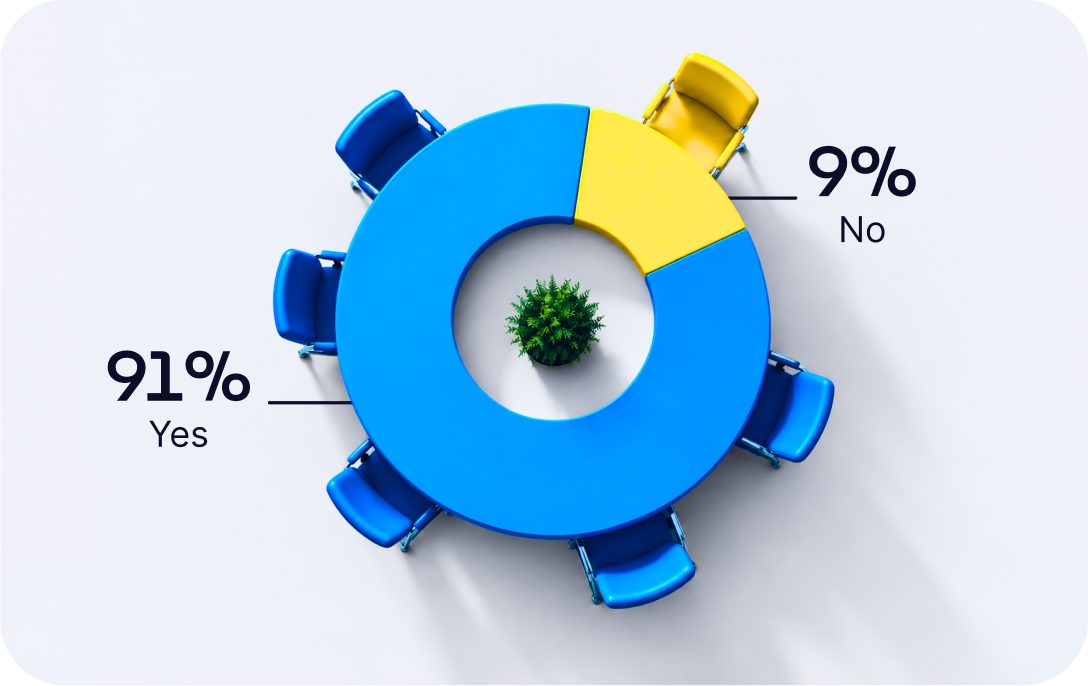
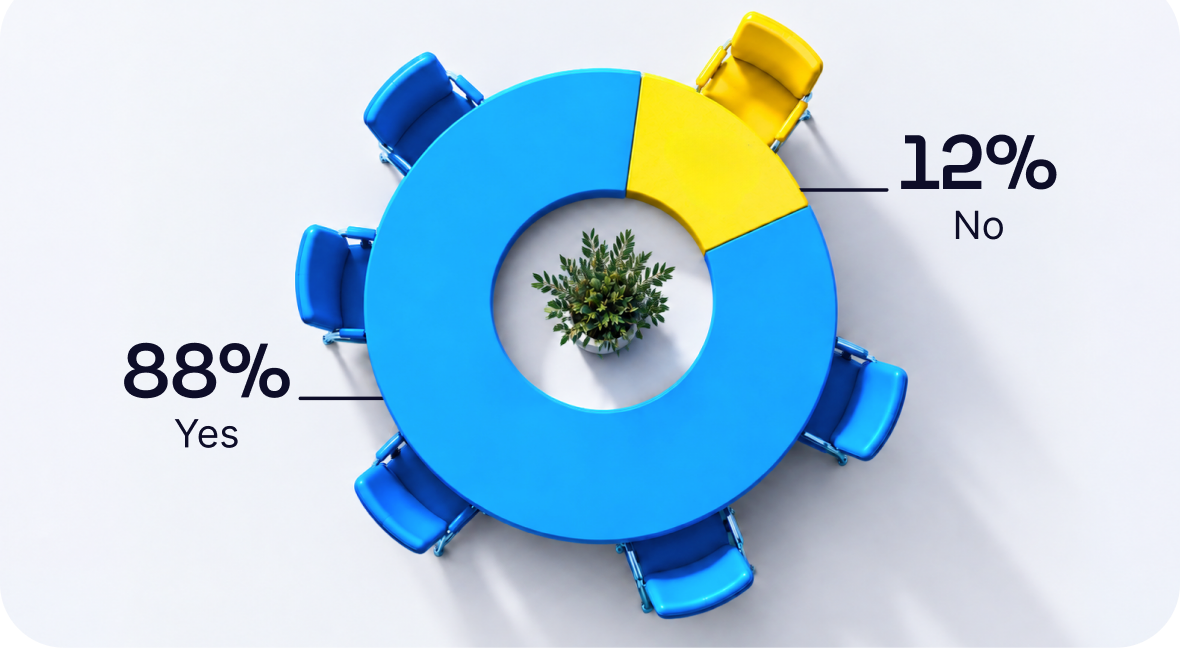
Our research put numbers on what most organisers already feel. Ninety-one percent are planning new meeting formats for the next twelve months. Eighty-eight percent believe that pre-scheduled, purpose-built meetings would improve exhibitor experience and support lead generation.
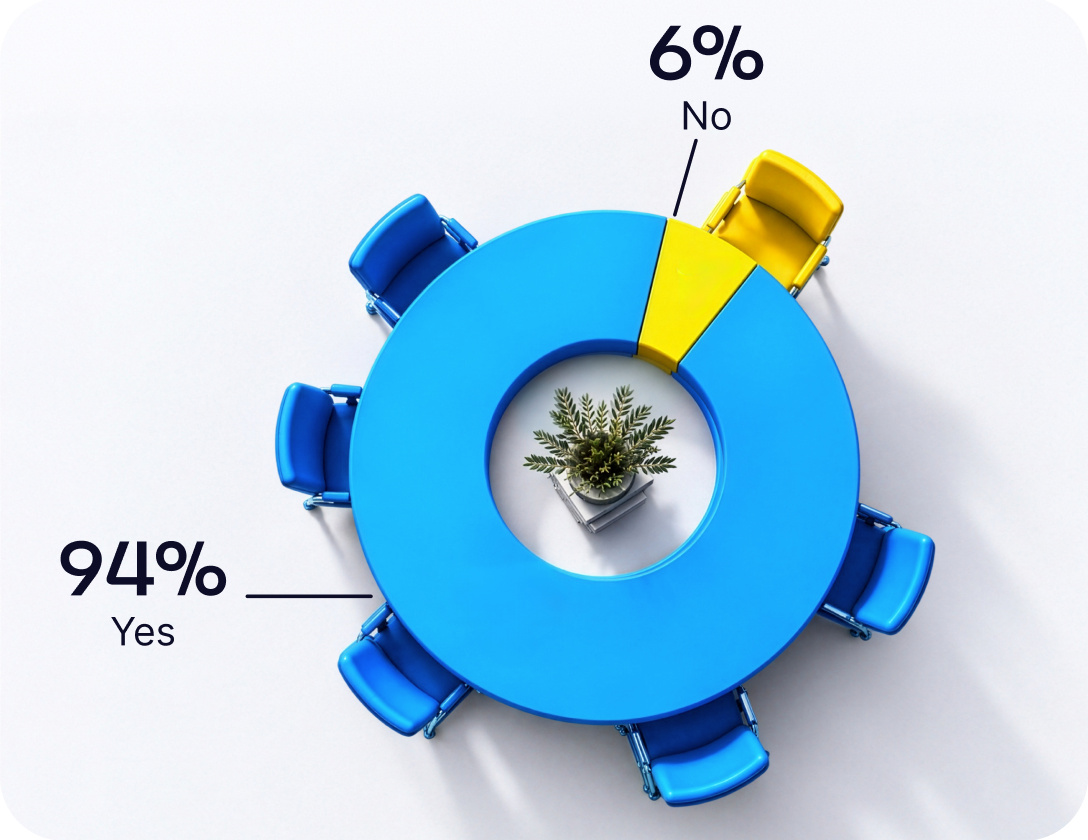
Ninety-four percent believe the same about buyer and visitor experience. Eighty-two percent see them as a route to new revenue through sponsorships and paid participation.
01
Would pre-scheduled purpose-built meetings increase your sponsor/exhibitor experience and lead generation?
02
Would adding pre-scheduled purpose-built meetings increase buyer/visitor experiences or enhance personalisation?
03
Would adding pre-scheduled purpose-built meetings help you to generate additional revenue?
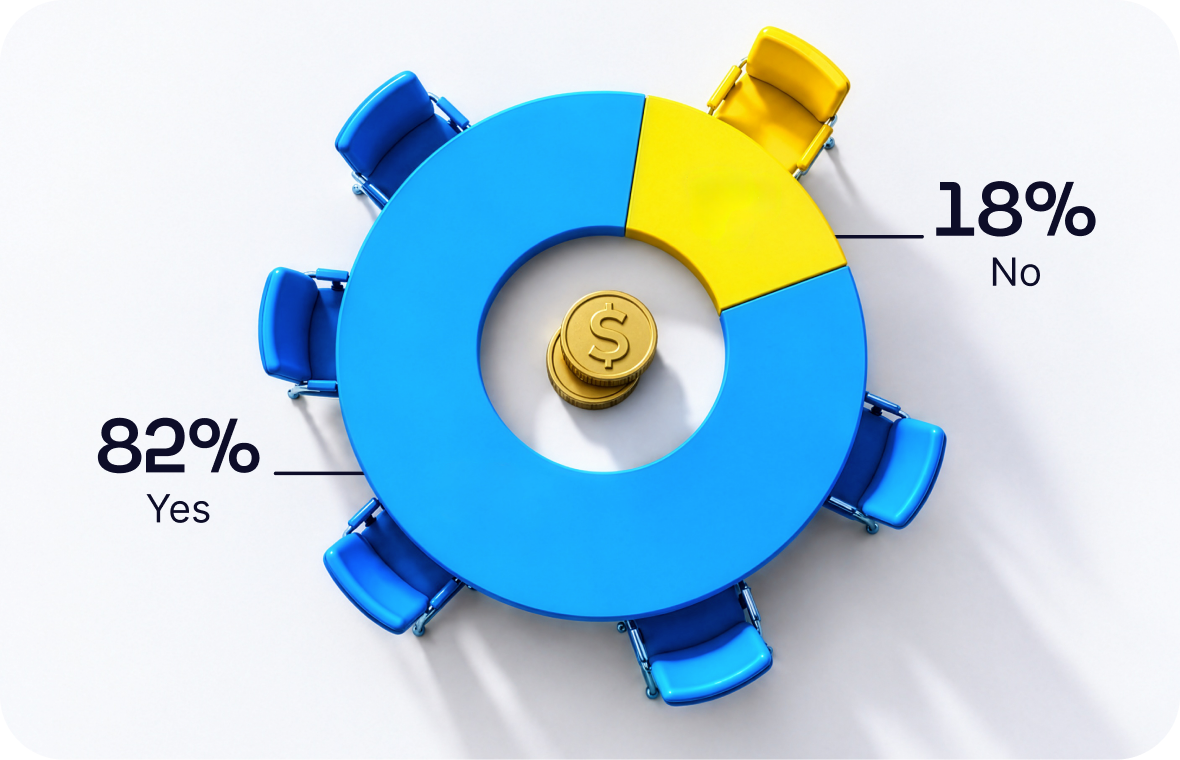
The interesting word in all four numbers is would. Organisers know the lever exists. They haven’t pulled it yet.
1.1 The uncomfortable truth about traditional networking
Traditional networking was never really designed. It evolved. Somewhere along the way, the industry agreed to call this networking and judge events on whether it felt busy.
Busy is not the same as effective. And the operators who built this industry know the difference.
Three patterns show up at almost every show:
Exhibitors leave with the wrong leads, or not enough of them.
They came to meet decision-makers. They met whoever wandered past the stand. The scanner counts both as a lead. The CRM cleanup three weeks later tells the real story – and so does the rebooking conversation six months after that.
Buyers spend the event looking for someone they never find.
They came with a shortlist of problems to solve and walked the floor hoping the right vendor would materialise. Some did. Most didn’t. The buyer goes home, the relationship never starts and the event takes the blame for a failure it had no system to prevent.
Organisers can’t prove what happened.
Footfall numbers, badge scans, app downloads – all measurable. Whether the meetings that mattered actually happened – much harder. Whether the leads were the right leads – harder still. Without that data, the rebooking pitch leans on relationships rather than results.
None of this is anyone’s fault.
It’s the inheritance of a category that grew up before the tools existed to design meetings deliberately. The tools exist now.
“
In the old days, you rented a big hall, you put a load of booths in, put in a load of people and hope that they all meet. Serendipity was wonderful.
Yes, we created it and did things and made sure the right people were there, but then you were still left trying to judge the ROI.
“
Event metrics are often transactional – badge scans, ticket sales – rather than experiential. Organisers look at the last metric and are afraid to rock the boat because they don’t want to fail in a binary sense. In tech, if you aren’t taking risks, you’re failing because that’s where learning happens.
I don’t see that A/B testing mentality in events – it’s more like ‘I’m going to put it on black and hope it’s successful’.
1.2 One root cause, three symptoms
It’s tempting to treat these as three separate problems. They aren’t. They’re three symptoms of the same issue:
root cause
Meetings are still treated as something that happens at events, not something that’s designed into them.
That leaves them unstructured, unmeasured and inconsistent in quality.
The equation changes when meetings are designed – the organiser becomes the architect of who meets whom, how and for what purpose. Lead quality stops being a function of stand position and starts being a function of format choice.
Buyer experience stops being a question of how energetic the lounge feels and starts being a question of whether the right conversations actually happened. Rebooking stops being a relationship pitch and starts being a data conversation.
This is the shift the 91% are reaching for.
They may not be using the language of meeting format design yet, but they’re describing exactly that – pre-scheduled, purpose-built, structured around specific outcomes.
1.3 What this ebook will argue
The rest of this book makes three connected claims.
01
Meeting formats are a discipline, not a feature.
Different business goals – discovery, evaluation, peer learning, VIP relationship-building, complex sales – require different structures.
02
Format design is the single highest-leverage intervention available to an event organiser today.
It moves all three of the metrics that matter – exhibitor leads, attendee experience and organiser revenue.
03
AI has changed what’s operationally possible – but the work is still strategic.
Matchmaking, scheduling, recommendations and notetaking can now run at a scale and precision that wasn’t available five years ago. But someone still has to decide which formats to run, for which audiences and with which goals.
Get a free consultation on meetings and event tech.
02
Why meeting formats are the lever
A meeting format is a purpose-built structure that matches business intent to interaction design. It specifies who meets whom, for how long, under what rules, with what kind of moderation or curation and to what end.
A speed networking session is a format. A hosted-buyer programme is a format. So is a closed-door board meeting and a sponsored round table.
Each one is engineered around a specific commercial goal – discovery, VIP relationship-building, complex sales, evaluation, peer learning – and each one performs poorly when used for the wrong job.
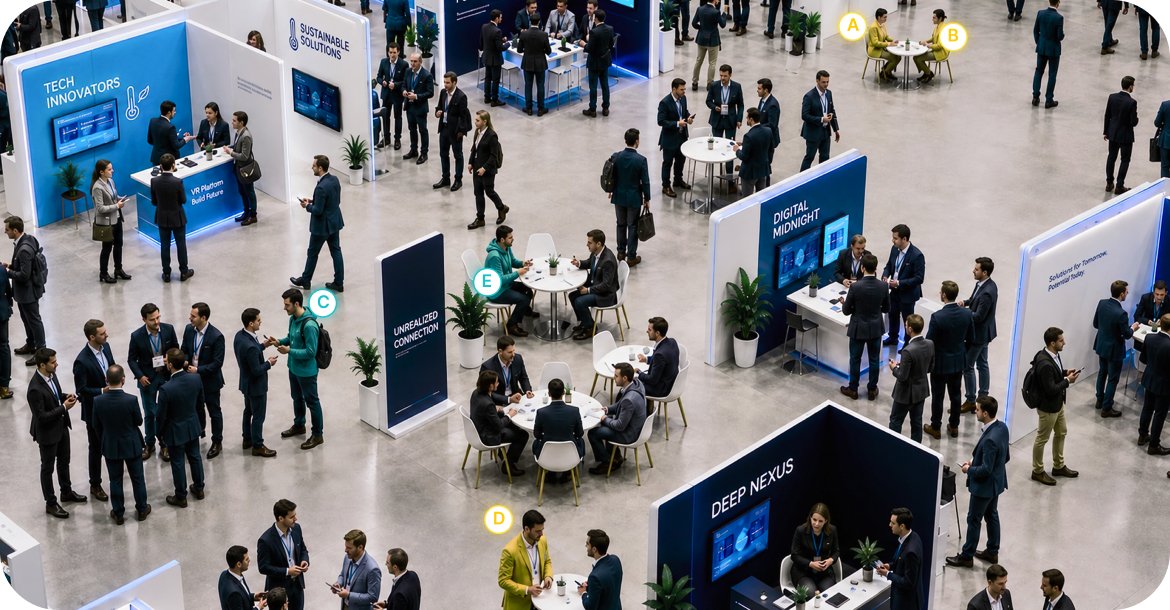 The mistake isn’t running the wrong format – it’s running no format at all and calling the result networking.
2.1 The shift from networking to format design
Most events today operate with one structural choice: open networking, plus whatever app-based booking exists alongside it. That’s not a format. It treats every audience and every business goal the same way and then asks why the outcomes vary so wildly.
Format design replaces that default with a deliberate choice – usually running in combination, each one assigned to a specific outcome. Each does its own job and the audience moves between them based on what they actually need.
This is how the highest-performing events in the industry already operate. What’s new is the tooling now exists to run multiple formats from a single platform, with AI handling the matchmaking complexity that used to make this operationally challenging.
“
Who wants to eat the same lunch every day for the rest of your life? Who wants to watch the same film over and over? Who wants the same experience in anything? In everything in life you want new things, new experiences.
So why as an organiser would you continue serving up the same format year after year?
“
There is a general trade show format – the idea that you walk into a hall and there’s a bunch of people exhibiting and you meet with them.
That has a certain connotation for being a little stale. But, mixing up meeting formats is not going to dramatically change the business model or the revenue model.
I think that’s very desirable and getting that formula right would be a good win for anybody trying to do it.
2.2 The commercial case: three outcomes, one intervention
Format moves three commercial metrics at the same time.
Exhibitors start getting qualified conversations when meetings are matched by AI against rated interests and business goals.
The commercial consequence is rebooking. Exhibitors who get the leads they came for renew without resistance. Format design is the most direct intervention available for protecting rebooking rates, because it addresses the actual problem rather than the symptom organisers usually try to fix – audience volume.
“
When you’re going into rebook conversations, it’s better for the client and for us that we’ve got some real hard numbers behind what’s doing – where you can say, ‘you spend X and we know we delivered this number of meetings, so cost per meeting equals this’.
Every brand weighing up whether to exhibit judges the decision on the same metric as the rest of its marketing spend: cost per qualified lead. Organisers who speak that language give exhibitors clarity on what they are buying and give themselves a sharper target to deliver against.
Meanwhile, a recent CEIR study found 41% of marketing budgets go toward trade shows. It means exhibitions absorb the single largest share of this spending pot – yet they are the line most often defended without the metric every other line is judged on.
more shows
Attendees who arrive with a clear, relevant schedule have a fundamentally different event experience from attendees who arrive with a floor plan and good intentions. This matters because attendee experience drives two things: return attendance and the willingness of senior audiences to engage at all.
The buyers who exhibitors most want to meet are also those least tolerant of wasted time. Format design – particularly concierge and hosted-buyer formats – is what makes those audiences viable to recruit and retain.
This line most directly answers the CFO’s question and it’s where format design becomes a commercial product.
Premium formats give organisers something to charge for beyond stand space and logo placement, with measurable outcomes attached. The meetings programme becomes a revenue line, not just a cost.
These three outcomes are connected. Better lead quality drives exhibitor rebooking. Better buyer experience drives audience retention. Both make premium formats easier to sell. Format design – moves all three.
“
CFOs treat events as an operating expense rather than a channel. If an event is successful, they don’t invest more – they ask if it can be done with less next time. You don’t hear that in sales or marketing.
CFOs have more organisational sway and often view innovation as a risk where you ‘bleed money’. There’s an ‘if it ain’t broke, don’t fix it’ mentality.
“
More and more chief marketing officers are going to be looking more and more at live events as a marketing communications channel. The good news about that is there’s more money coming into the live event marketplace.
The shadow side of it is that chief marketing officers have quite serious demands on return on investments for that money.
Live events are super connectors of buyers and sellers and serendipity will always be an exciting factor but, that serendipity can be enhanced with creating intelligent meetings to improve ROI for all stakeholders.
2.3 What this requires
01
AI infrastructure
To match participants intelligently
02
Operational tooling
To run those formats without overwhelming the organiser team
03
Strategic expertise
to know which formats to combine.
The first two are increasingly available. The third is where most platforms fall short – and where the difference between a meetings module and a meetings specialist shows up.
03
Implementing Intelligent Meetings: How to maximise modern event formats
Organisers can enhance revenues by innovating around simple registration forms where attendees check boxes to indicate their interests. Paul Miller argues that the future belongs to “intelligent meetings”. This model leverages AI to track year-round behavioural data and content consumption, allowing organisers to uncover true buyer intent before an event even begins.
3.1 The core insight: Moving beyond self-qualification
Paul outlined the mechanics behind these advanced matchmaking systems, explaining that self-reported survey data only skims the surface of what buyers actually want.
Traditional event matchmaking relies entirely on what buyers claim they are interested in via standard registration forms.
Modern event technology changes this by using AI to analyse actual content consumption habits and digital behaviour over time.
This predictive data layer uncovers true business intent to create much more accurate and valuable networking connections.
“
That’s where AI layers over the top, being able to pull out nuggets from mass data.
That leads to what could be termed intelligent meetings. Instead of you telling me you’re interested in a new laptop, we can say ‘actually what you’ve really been consuming from a content perspective is mobile security software.
So we’re going to suggest that you consider meeting some security software solution providers’.
3.2 How to optimise your meeting formats
Here’s how you can transform your B2B networking environments from basic interactions into high-value tools by focusing on three strategic areas.
Use AI to track actual content consumption leading up to the event, allowing you to pair attendees with vendors based on real-time behaviour rather than potentially outdated survey answers.
Build a continuous stream of specialist niche content – newsletters, webinars and trade articles – to capture the digital footprint required to run accurate predictive matchmaking.
Group buyers into specific intent tiers. Sponsors will gladly pay a premium to meet attendees who are ready to buy soon over those at an earlier stage.
Adopting this data-driven approach helps you shift the value proposition from simple physical proximity to high-probability business transactions. It also insulates your events from industry commoditisation and delivers the measurable ROI that modern chief marketing officers demand.
3.3 Beyond the booth — Monetising lead enhancement and look-alike data
The commercial relationship between an organiser and an exhibitor has traditionally ended when the show floor closed. Exhibitors left with raw badge scans and organisers struggled to prove ROI based entirely on top-of-funnel volume.
Progressive organisers are now shifting from selling physical proximity to providing continuous data enrichment services. Simon Foster highlights this paradigm shift.
“
Events traditionally are very much at the top of the funnel. We very much want to make sure that we can help customers all the way down to the bottom of the funnel.
It’s not just ‘please take a booth and good luck and we’ll see how many people you get.’ It’s much more about being able to show them and enhance the data they get.
Shifting focus from raw data (who they are) to actionable insight (what they do) means organisers can package two highly lucrative post-event data products:
Organisers cross-reference an exhibitor’s live event connections against their year-round database to enrich profiles with cross-platform intent signals and engagement history.
Using AI, the platform analyses an exhibitor’s best onsite leads and identifies matching, highly qualified prospect profiles within the broader database who didn’t attend the live event.
↻ Compounds each event
This transition transforms the three-day exhibition into a year-round, high-margin revenue loop. Simon Foster set out how this model expands market share by embedding events directly into the client’s core marketing lifecycle.
“
We can then look across our wider database and both enhance and enrich the information you’re getting, which the customer will pay for, but also we can do look-alikes. We can drive those.
That becomes a very nice virtuous circle because the more we do and the more we can see what people are doing, the more we can do that. There’s a virtuous circle of revenue and opportunity as well as the virtuous circle of data.
Utilising AI to monetise behaviour behind a proprietary firewall means organisers insulate their events from commoditisation, deliver verified bottom-of-funnel pipeline to exhibitors and maximise the commercial value of their community data.
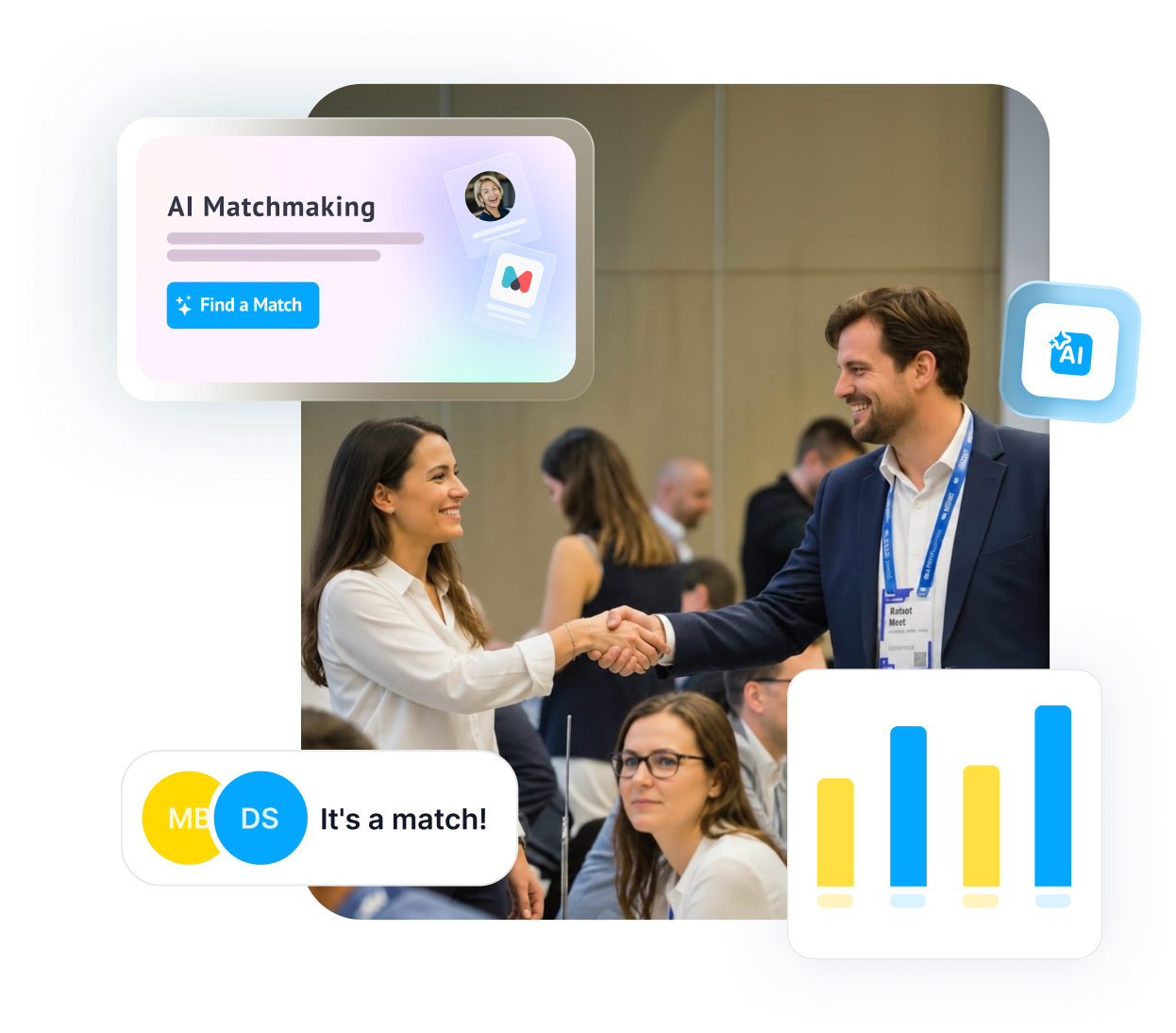
Client spotlightExpoPlatform is the engine behind tech-enriched meeting formats across flagship Hyve events. This includes major shows such as POSSIBLE, Bett and the leading retail industry brand Shoptalk. Formats include a mass structured meeting programme, round tables and exhibitor events.
Ready for a free one-to-one consultation on meetings and event tech?
04
Seven formats organisers are actually asking for
ExpoPlatform’s survey of event organisers asked which meeting formats they planned to add to their events in the next twelve months.
Speed Networking led the field at 79%, followed by Round Tables at 65%, Concierge Meetings at 62%, Exhibitor Events at 50% and Hosted Buyer Programmes at 35%.
Which formats would you like to add to your event experience?
Programmes
It tells us organisers want specific structures that solve specific problems – discovery, VIP curation, peer learning, content-led engagement, end-to-end buyer journeys. Each format earns its place by doing a specific job.
What follows is a working guide to seven formats – the five organisers are prioritising, plus two more that round out a complete meetings strategy: Self-Requested Meetings (the foundational layer) and Board Meetings (the closed-door, high-intent format for complex sales).
Format 01 of 07
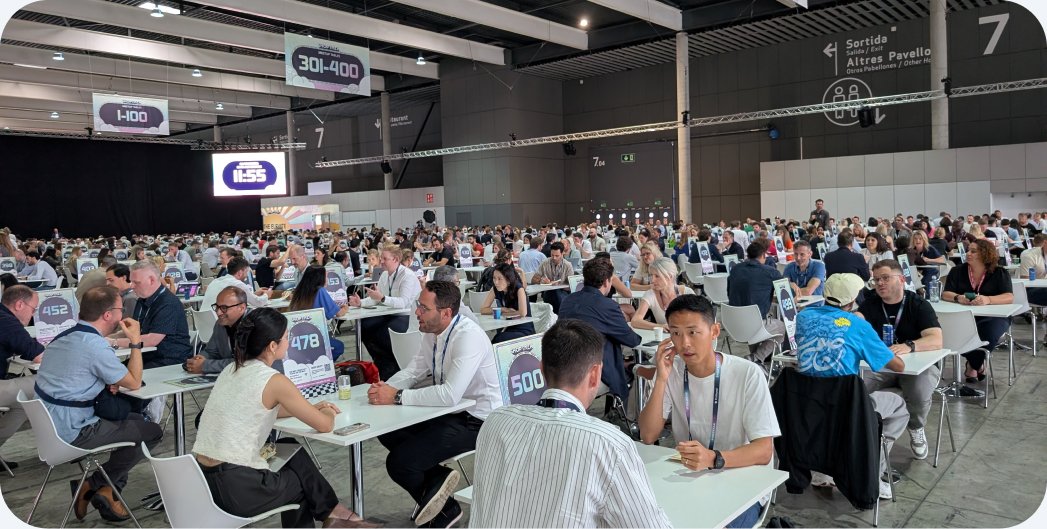
4.1 Speed Networking
The discovery engine
The problem it solves
Exhibitors and buyers know they should be meeting someone – but they don’t yet know who. Left to chance, the right matches never happen and the wrong ones waste everyone’s time.
How it works
Short, structured micro-discovery meetings powered by AI matching and organiser-defined rules. The organiser controls meeting concept, meeting duration, number of meetings per participant, table layout and breaks. Participants can shape their own schedule, and the format supports walk-in or opt-in entry.
Best for
Trade shows and exhibitions where buyer-seller volume is the priority or community events where peer discovery matters. Works at every audience seniority level when configured well.
Outcome
Builds shortlists fast, surfaces matches that wouldn’t have happened organically and feeds the broader meetings pipeline. This format does the most to lift lead volume.
Format 02 of 07
4.2 Concierge Meetings
White-glove curation for VIPs
The problem it solves
Senior buyers and C-level participants expect curation, context and a human point of contact – not a booking app. Without that, no-show rates climb and the most valuable meetings never happen.
How it works
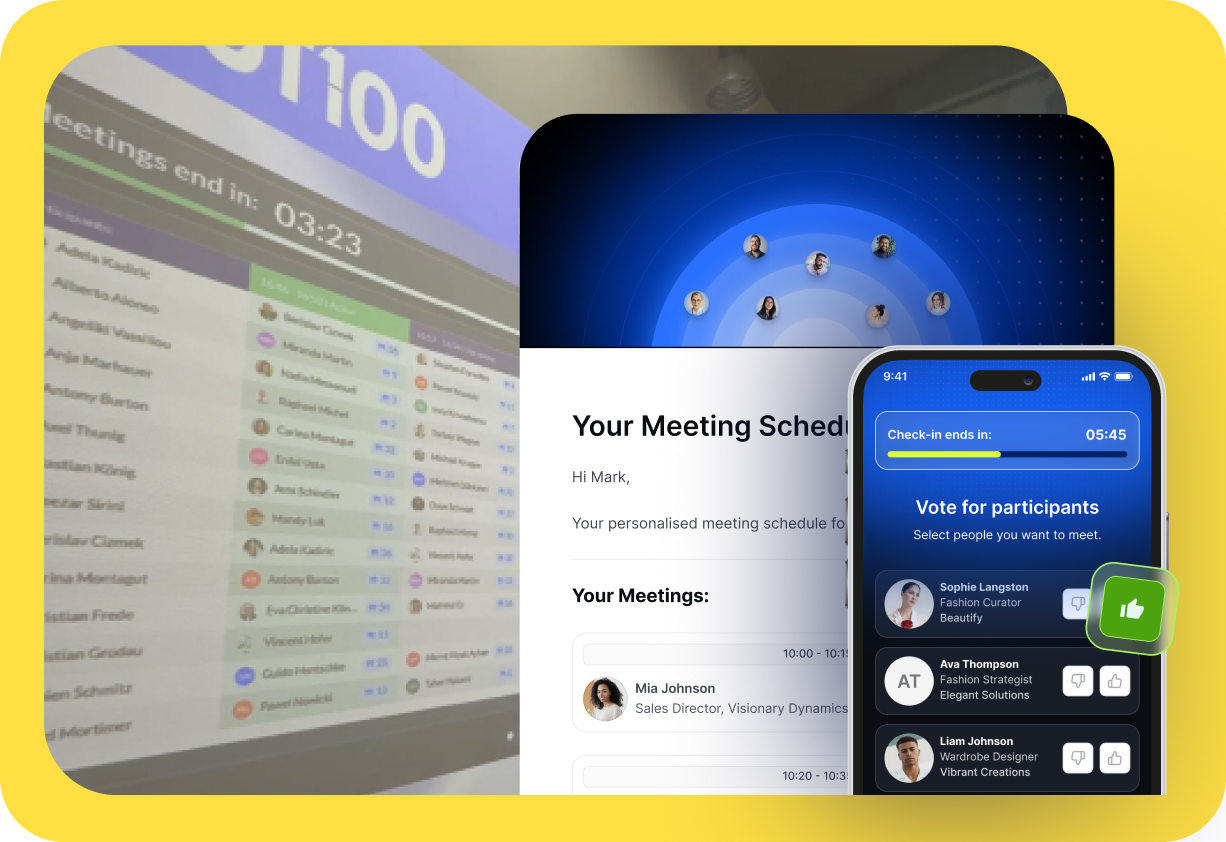
Semi-automated, organiser-led matchmaking. The organiser’s concierge team uses AI suggestions, favourites and contextual insight to curate the best possible matches, personally reaching out, proposing meetings and fine-tuning schedules. A human touch with AI doing the heavy lifting.
Best for
Premium sponsorship tiers or any event where senior decision-makers are part of the audience.
Outcome
Higher attendance, better-qualified conversations and a premium participant experience that justifies premium pricing. This format protects top-tier sponsorship revenue.
Format 03 of 07
4.3 Round Tables
Peer learning that doubles as lead generation
The problem it solves
Some audiences won’t engage with direct selling but will happily discuss shared challenges with peers.
How it works
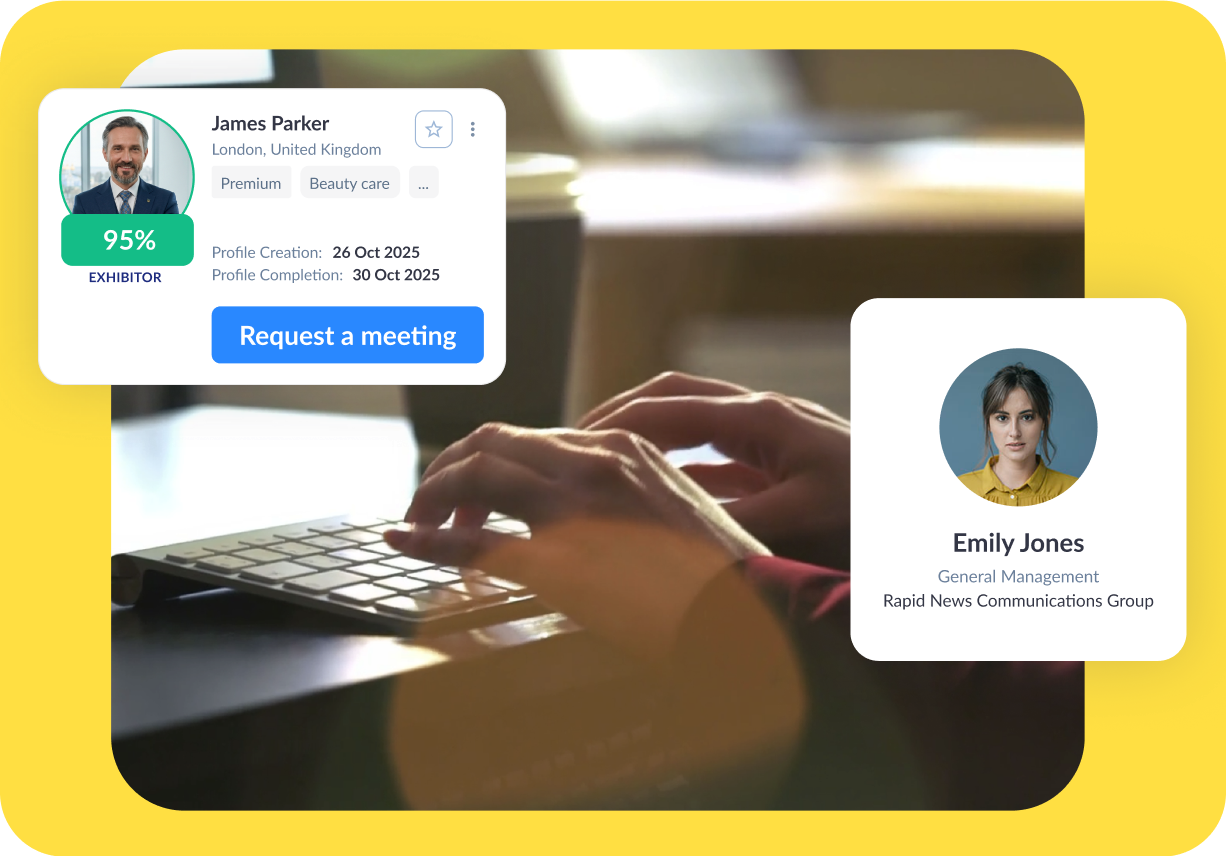
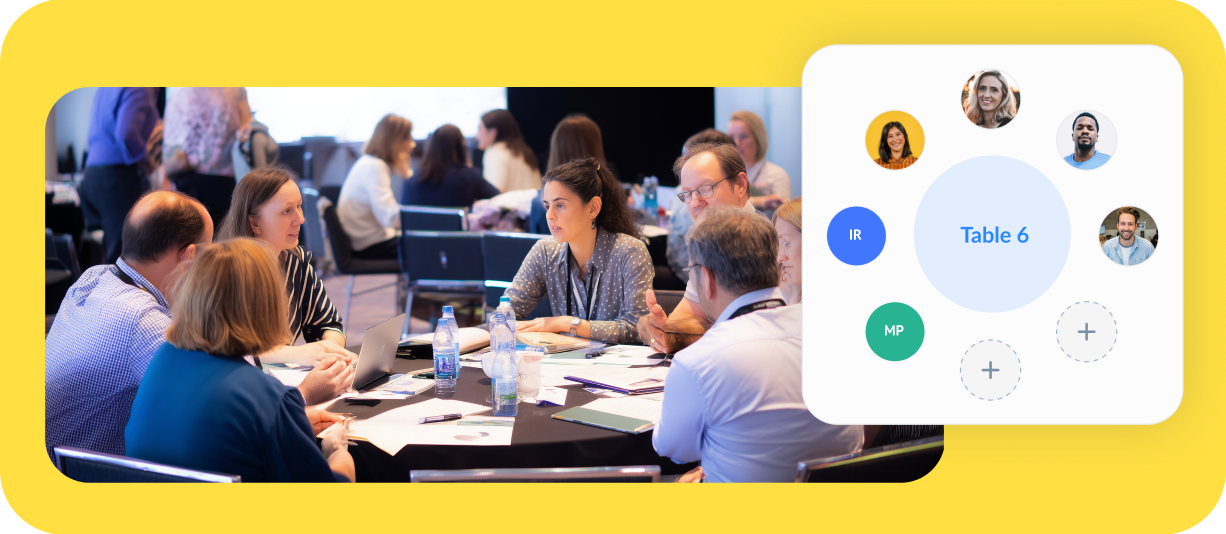
Small groups of peers gather around a specific topic with each table moderated and supported by AI-driven assignment based on rated interests. It prioritises discussion and insight.
Best for
Senior peers, knowledge-led events, sponsor-hosted content tracks and any moment where trust and depth matter.
Outcome
High-quality follow-ups and sponsor engagement with attendees who have issues the sponsor solves.
“
From a commercial perspective for us as the organiser, they are easier to sell – people know what they are. Operationally, they’re getting even easier to run and people like them. Onsite at an event – even with a lot of human interaction and yelling at people to grab a seat – people actually like them and want to go to them.
Format 04 of 07
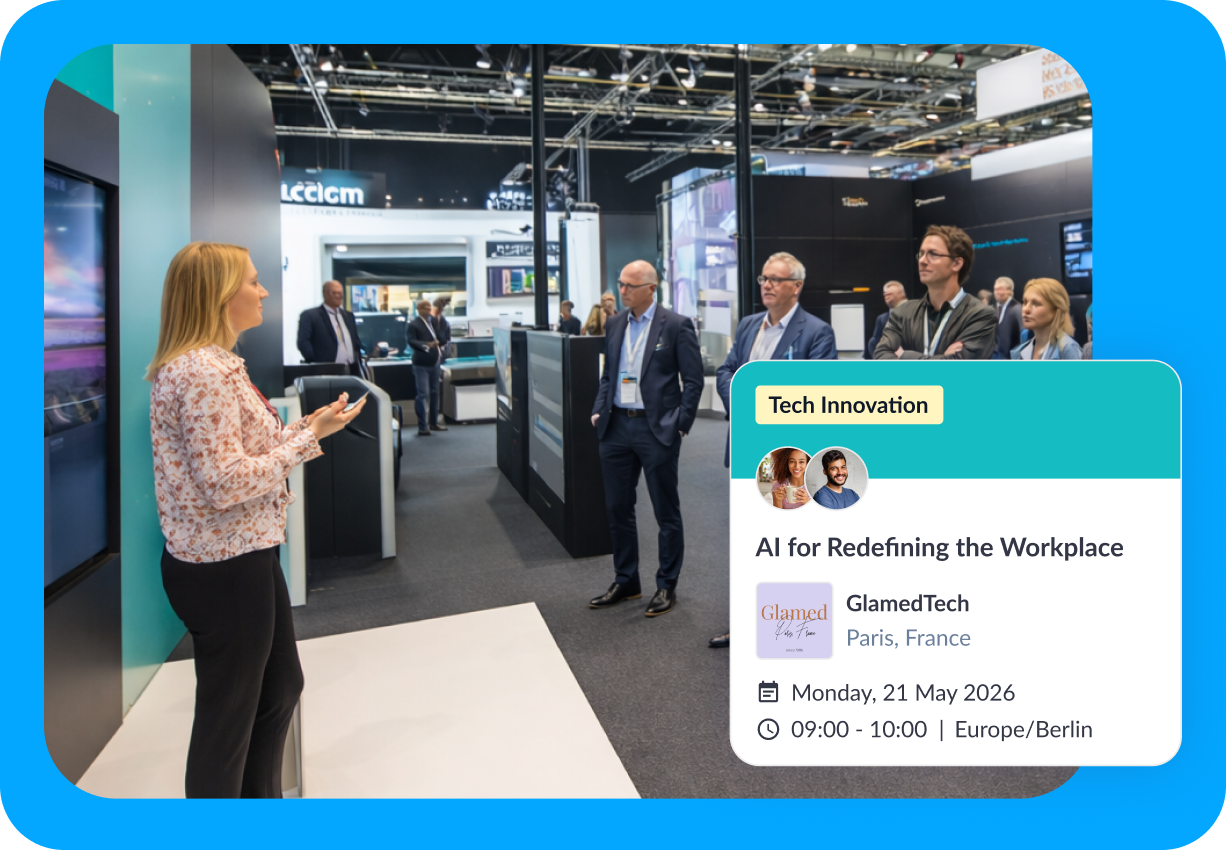
4.4 Exhibitor Events
Stands as stages
The problem it solves
Exhibitors who rely on passive booth traffic struggle to justify spend.
How it works
Content-led sessions hosted and run by exhibitors directly at their stands – demos, product launches, expert talks, live interactions – designed for multiple attendees at once. Promoted through the platform and bookable in advance.
Best for
Exhibitions and trade shows with strong product-led narratives, technology launches or expert positioning opportunities.
Outcome
Higher booth footfall, exhibitors positioned as thought leaders rather than vendors and a measurable lift in qualified leads per stand. A format that exhibitors can point to when justifying rebooking.
Format 05 of 07
4.5 Hosted Buyer Programme
The end-to-end premium journey
The problem it solves
Running a hosted-buyer programme manually is operationally brutal – validation, benefits, permissions, travel logistics and pre-arranged meetings across hundreds of moving parts.
How it works
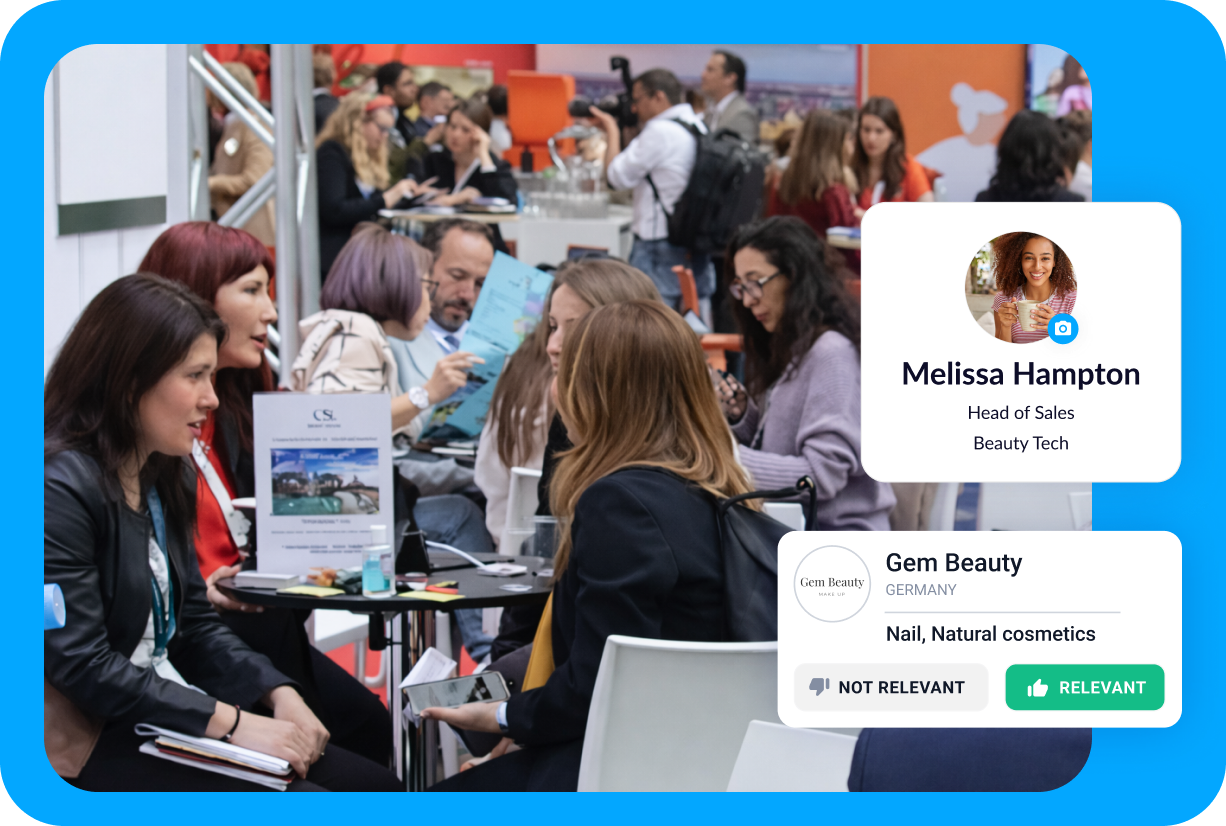
A comprehensive management solution covering the full journey: buyer validation, benefit and permission allocation and pre-arranged meetings between selected buyers and exhibitors.
Best for
Trade shows and B2B events where buyer quality is the central commercial proposition and where rebooking depends on exhibitors getting the meetings they paid for.
Outcome
A premium audience experience that justifies premium exhibitor packages, with operational overheads cut to something a small team can manage. Tech turns the programme from a cost centre into a profit centre.
Format 06 of 07
4.6 Board Meetings
Depth over volume
The problem it solves
Complex, high-value solutions need a room, a conversation and a board of decision-makers in the same place at the same time.
How it works
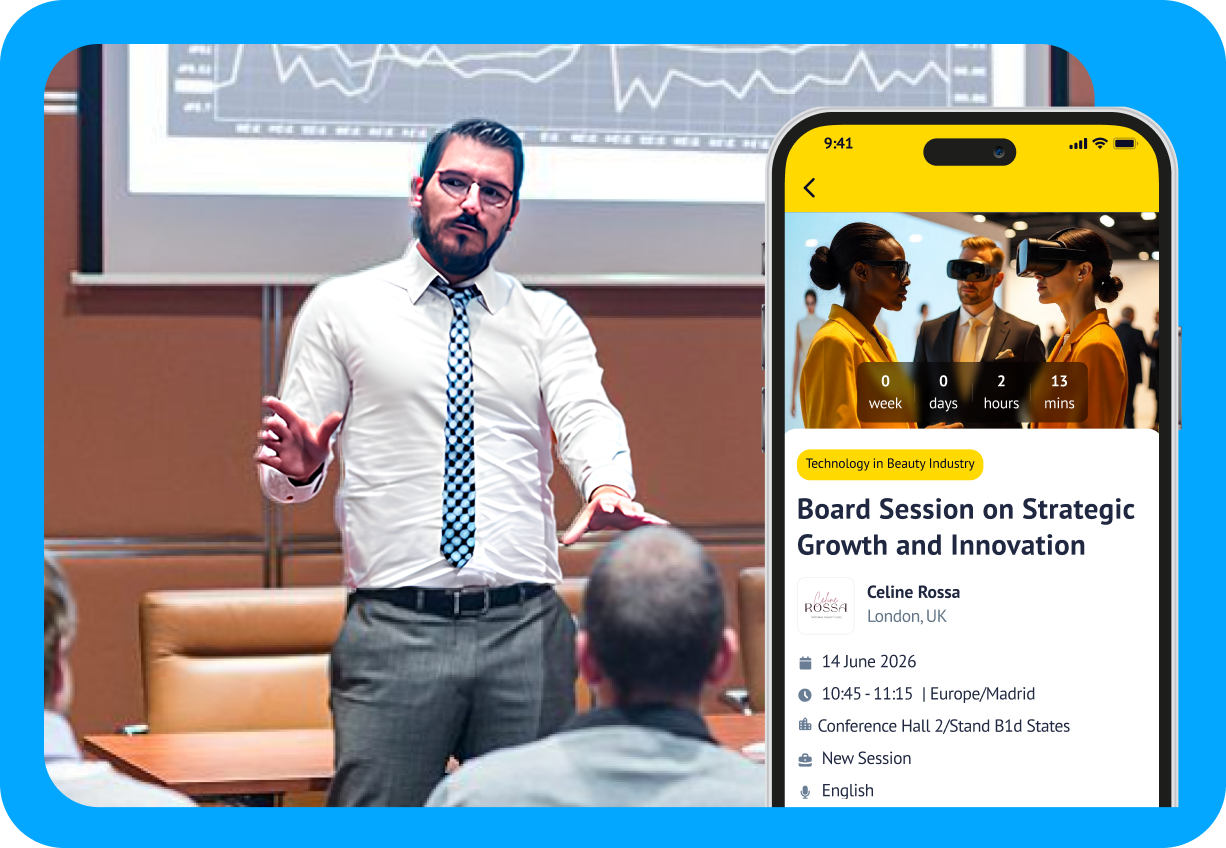
One exhibitor presents to a curated cohort of pre-qualified buyers who move through the session together as a single group. The exhibitor goes deep on their solution – buyers go deep on questions and use cases.
Best for
Enterprise sales contexts, capital-intensive products, regulated industries and any commercial conversation that requires dialogue rather than a demo.
Outcome
Multiple qualified opportunities from a single session, with the depth of conversation that one-to-one meetings rarely allow. This format makes complex sales viable inside an event programme.
Format 07 of 07
4.7 Self-Requested Meetings
The foundational layer
The problem it solves
Participants need to be able to find each other and book directly.
How it works
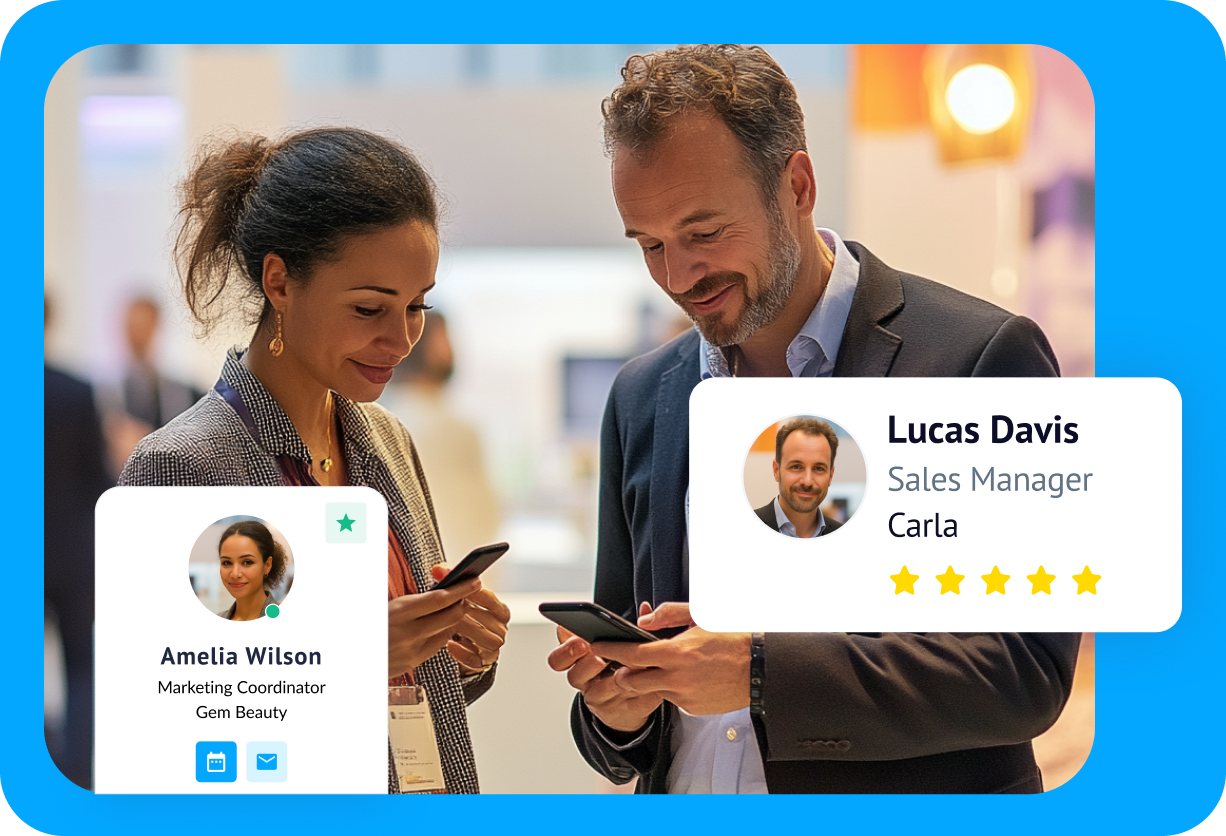
Exhibitors and visitors schedule meetings using AI-powered recommendations and search. The platform handles availability, calendars, confirmations and reminders.
Best for
Every event. This is the foundation layer that the other six formats sit on top of.
Outcome
A baseline of bookable meetings across the entire audience, with AI ensuring the recommendations are relevant. The volume layer that makes the curated layers above it look exceptional by comparison.
4.8 How the formats fit together
These seven formats are complementary layers in a complete meetings strategy. Self-Requested Meetings provide the always-on baseline. Speed Networking drives discovery and volume. Round Tables and Exhibitor Events deepen engagement and content value.
Concierge Meetings, Hosted Buyer Programmes and Board Meetings deliver a premium tier – curated, high-intent moments that justify premium pricing and prove ROI to the audience that matters most.
“
I am a big fan of events that rely on serendipity and connecting with other attendees without a rigid buyer-seller structure. But for most people, it’s really hard to get buy-in to attend. When you’re trying to get a budget from your boss – it’s a very tough sell.
Because if you say ‘I’m going to go to this event and there’s no agenda and we’re going to sit around and talk to each other’. Your boss will say ‘No, you’re not. There is no budget for you to sit around and talk to people’.
It only works when there’s a real reputation, when people trust that it’s going to happen.
05
Designing your meetings strategy
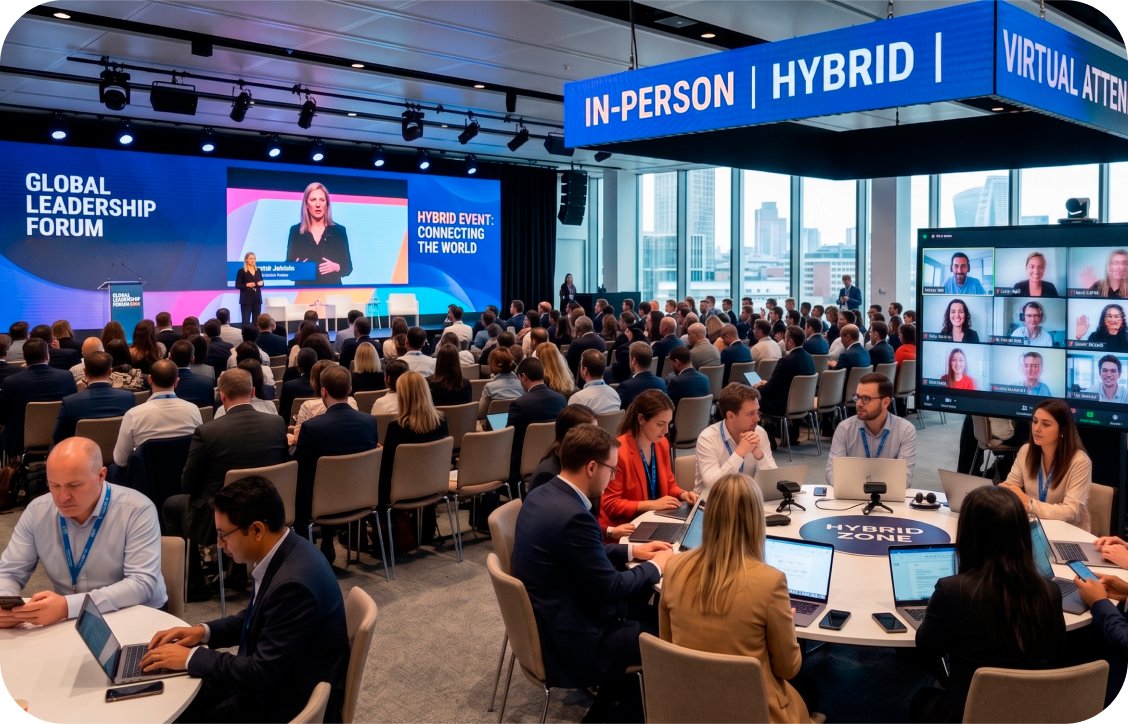
The skill is in choosing the right combination of formats for your audience, your commercial model and your event archetype – then weighting each format appropriately within the programme.
There’s no single right answer. There are better and worse answers for specific contexts and three questions that get you to them faster than anything else.
5.1 The three questions that drive format choice
Who is your highest-value audience – and how do they buy?
Format choice starts with the audience whose presence makes the event commercially viable. For most B2B events, that’s a specific buyer profile. Two things matter about them – their seniority and the complexity of their buying process.
They won’t self-serve through a meeting app and they won’t tolerate a programme full of irrelevant approaches. Concierge Meetings and Hosted Buyer Programmes are designed for them. At least one curated format is non-negotiable if your highest-value audience is C-level or equivalent.
Brief meetings won’t move the deal forward if buyers are evaluating capital-intensive solutions, regulated products or anything needing multiple sign-offs. Board Meetings and Round Tables give those conversations the room they need.
When breadth of contact matters more than depth, Speed Networking and Self-Requested Meetings deliver it at scale.
“
The most successful events have different experiences tailored to different people. Without this, everyone is treated like the average or just as buyers and sellers. That leads to static, boring designs.
What does your exhibitor proposition actually sell?
Different exhibitor types need different formats to succeed and your meetings strategy has to be calibrated to whichever type accounts for the largest share of your stand revenue.
Companies selling demonstrable products, technology or innovation get value from Exhibitor Events. The format lets them position their stand as a content venue, drive footfall on a schedule and use the platform to promote sessions in advance.
Companies selling complex, consultative offerings get the most from Board Meetings and Round Tables. They need depth, dialogue and the ability to engage multiple stakeholders simultaneously.
Companies for whom lead quantity drives the commercial case – get the most from Speed Networking and Self-Requested Meetings. The objective is a qualified pipeline at scale.
Events often have all three exhibitor types in the room. The question is which type dominates the commercial mix, because that’s the type your meetings strategy has to optimise for first.
Where is the revenue coming from – and where could it come from?
Some formats are operational infrastructure – Self-Requested Meetings, Speed Networking – they make the event work, but they don’t generate revenue directly. Others are sellable inventory – Concierge Meetings, Hosted Buyer Programmes, sponsored Round Tables – they create premium tiers organisers can package and charge for.
Your meetings strategy should weight towards sellable formats if new revenue is the priority. If exhibitor retention is the priority, weight towards the formats that lift lead quality. Weight towards the formats that improve buyer experience and word-of-mouth if audience growth is the priority.
These aren’t mutually exclusive, but they do imply different starting points. Just be honest about which one matters most for your event’s next twelve months.
5.2 The power of the unbundled model
Unbundling legacy sponsorship tiers can transform your event into a dynamic offering of high-value business interactions. Your sales team becomes a consultative partner capable of matching a sponsor’s unique pipeline deficit with the precise meeting format engineered to solve it.
“
One thing we’ve done is unbundling. We used to have gold and platinum packages, but now you create your own package and buy where you believe there’s value. If you want to meet senior people, take a one-to-one meeting package.
If you want to discuss a topic as a thought leader, a roundtable or keynote would be great. Everyone’s got different priorities and objectives. It’s about our sales team matching their problem with the format that delivers the best solution.
5.3 Mapping commercial objectives to format inventory
Treating meeting formats as standalone, sellable inventory means you can charge premium prices attached to measurable outcomes. Below is a strategic framework for how your sales team can align a sponsor’s business goals with your event’s architectural formats:
Format ApproachHIGH VALUE
5.4 The sales team’s new toolkit
Transitioning to an unbundled, format-driven sponsorship model requires a shift in sales capability. Your team is no longer selling features, they are selling strategic solutions. This protects your event. Renewal conversations stop being a negotiation over price when sponsors can dictate exactly where their budget goes and tie that spend to cost-per-meeting and deal-flow attribution.
5.5 Three event archetypes, three meetings strategies
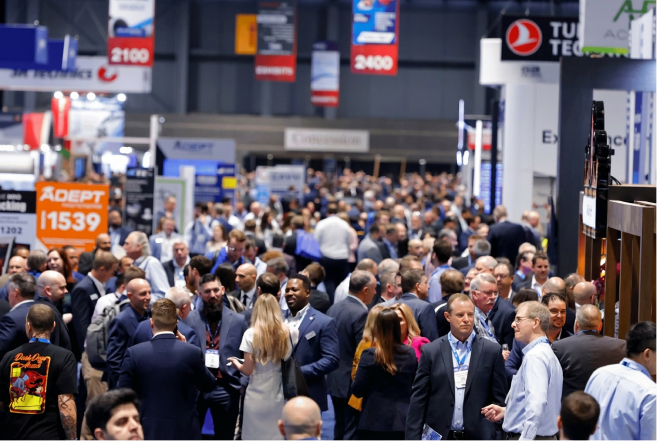 Large trade show
Hundreds of exhibitors and thousands of attendees.
- Speed Networking
- Self-Requested Meetings
- Concierge Meetings
- Round Tables
Breadth → Discovery → Revenue
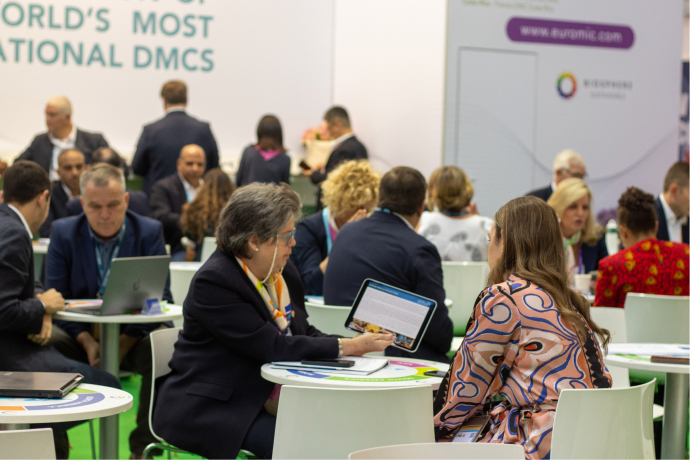 Hosted-buyer event
Smaller audience. Higher value connections.
- Hosted Buyer Programme
- Concierge Meetings
- Round Tables
- Self-Requested Meetings
Curation → Quality → Value
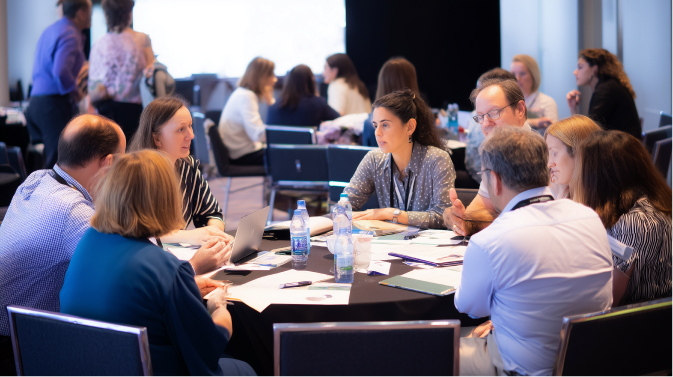 Conference + exhibition
Content-led event with a supporting expo floor.
- Round Tables
- Board Meetings
- Self-Requested Meetings
- Exhibitor Events
Depth → Dialogue → Trust
5.6 Common mistakes to avoid
A few patterns show up repeatedly in events that haven’t fully thought through format design.
Running every format because the platform supports it.
More formats isn’t a better strategy. Each format costs operational attention, marketing space in the run-up and audience cognitive load during the event.
Treating Self-Requested Meetings as the whole strategy.
This is the most common mistake. Self-Requested is the foundation, not the building. Events that stop there miss everything format design is supposed to deliver.
Choosing formats by what’s familiar rather than what fits.
Some organisers default to the formats they’ve run before, regardless of audience fit. The three questions above are a forcing function against that bias. Run them honestly and the format mix will sometimes surprise you.
Underweighting curation for senior audiences.
If your highest-value buyers are senior and your strategy doesn’t include at least one curated format, the strategy is incomplete. Senior audiences don’t fail to engage because they’re uninterested. It’s because nobody curated the experience for them.
What matters is that the choice is deliberate. The 91% of organisers planning new formats for the next twelve months are reaching for exactly this kind of intentionality. They’re moving from a single-format default to a designed combination and they’re choosing platforms that can run that combination from a single system rather than seven disconnected tools.
5.7 Designing for the high-end buyer
It’s easy to fall into the trap of over-engineering the schedule when designing a meetings strategy. Organisers often aim to fill every minute of an attendee’s calendar with pre-matched appointments in a bid to prove maximum ROI to exhibitors.
But this hyper-structured approach can backfire when you target your most valuable audience. High-end buyers do not attend events to be pushed down a transactional assembly line. If their schedule is entirely booked with aggressive sales pitches, they simply won’t show up.
Miguel Neves points out that over-automation risks alienating the very audience your exhibitors are paying to meet.
“
The high-end buyer or the end-user client tends to feel a bit stalked when they come to events.
Anything where there’s more personalisation, where they can really choose the people that they want to meet, but also have some sort of room for serendipity is good – because you’re never going to find that startup that does something really cool if you’re only meeting with the customers that you know you have to speak to.
This means organisers must find the balance between deliberate personalisation and controlled serendipity to design a meetings strategy that appeals to premium buyers.
5.8 Engineering curated serendipity
Technology can now bring the right people into the same smaller physical spaces to let natural chemistry do the rest.
01
Keep the baseline flexible:
Don’t force high-end buyers to fill entire days with pre-scheduled slots. Restrict mandatory one-to-ones to a highly curated, brief window – leaving the rest of their time open for exploration.
02
Utilise low-pressure group formats:
Integrate moderated Round Tables and Board Meetings. These formats allow buyers to sit next to peers and vendors in a problem-solving setting rather than a direct-pitch environment.
03
Protect editorial discovery:
Combine AI matching suggestions with human editorial highlights. Use the event platform to feature outliers – such as innovative startups or unique regional solutions – so buyers are prompted to step outside their standard search criteria.
Aligning your meeting formats with the behaviour of high-end buyers means you protect their experience. They leave your event feeling their time was spent productively and organically, rather than feeling hunted. This satisfies the buyer, which then secures the long-term value proposition for paying exhibitors.
Do you want a consultation on better meetings and event tech?
06
Human-in-the-loop: where AI ends
There’s a version of this ebook that would tell you AI has solved meetings.
That version of the ebook would be wrong and the organisers reading it would know.
The honest version is this: AI has genuinely changed what’s operationally possible in event meetings.
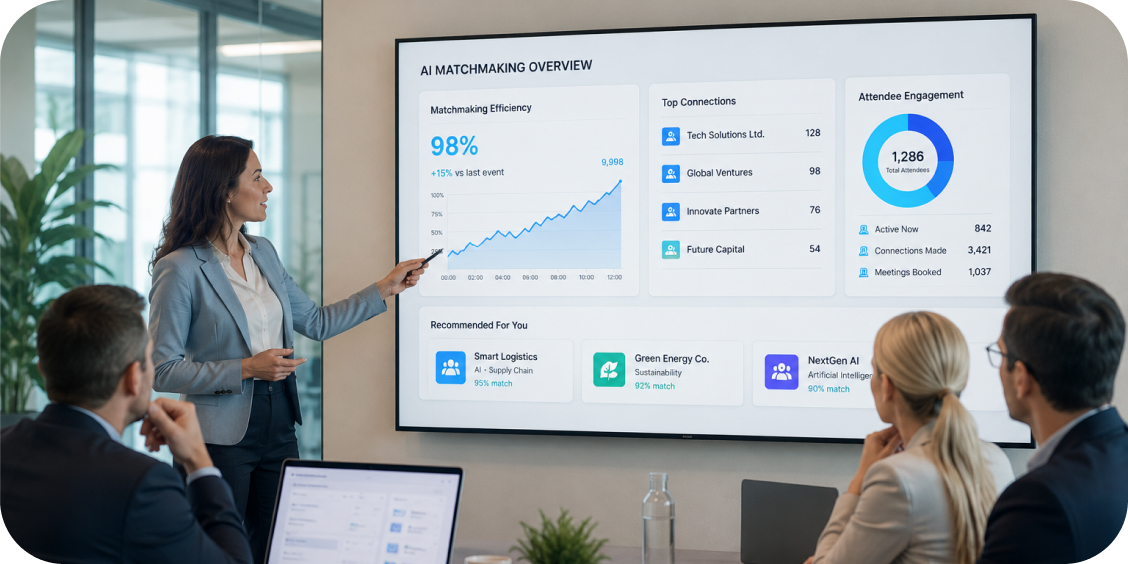
Matchmaking at scale, real-time scheduling, personalised recommendations, automated notetaking, behavioural analysis across thousands of participants – all of these now work at a precision and speed that wasn’t available five years ago.
The technical infrastructure underneath modern event platforms is meaningfully more capable than what came before and the meetings programmes built on top of it are correspondingly better. But more capable isn’t fully automated. The platforms that pretend otherwise are selling something that doesn’t exist.
6.1 What AI does well in event meetings
Let’s be specific about where AI genuinely earns its place.
Matchmaking
This is the biggest single use case and the one where AI’s contribution is most measurable. A well-trained matching system can process thousands of profiles against rated interests, stated goals, behavioural signals and historical data.
Scheduling complexity
Coordinating meetings across thousands of participants, multiple formats, variable availability and physical constraints is the kind of combinatorial problem AI handles well and humans struggle with. The operational lift this removes from the organiser team is the precondition for running multiple meeting formats simultaneously without the same level of stress.
“
AI for us is a double-edged sword. Yes, we want to protect and keep our insight, our content and what we’re doing – our proprietary things – behind our walls and behind our moat.
But on the other hand, AI gives us a huge amount of opportunity to enhance what we’re doing for the clients, drive how we can connect people and move things through.
“
If you’ve only got an event of a few hundred people, you can hand-do it on a spreadsheet at night. But most of our shows have a minimum of 3,000 people – going up to 30,000. That’s much harder to do at scale.
AI can really help enrich and augment that data, find good signals and then suggest groupings to put people together.
Recommendations and personalisation
AI-driven recommendations work because they get better with data. Each session attended, meeting accepted, profile favourited adds signal that improves the next recommendation. This is the difference between an event that feels personalised and one that feels generic.
Real-time adaptation
AI can re-rank, re-suggest and re-match in response to behaviour during the event itself. An attendee who skips three sessions on one topic and joins two on another shouldn’t keep getting recommendations for the first. AI can handle that drift in real time.
Data capture and synthesis
AI notetakers, behavioural analytics and conversation summarisation turn meetings into structured data that can be acted on – by exhibitors following up, organisers proving ROI and sponsors justifying spend.
6.2 The no-show nightmare: How on-site dynamic scheduling saved the grid
A delayed flight, an extended client lunch or a forgotten calendar invite is all it takes to destroy the planning of a manually pre-matched schedule. When an attendee is left stranded at a “ghost table,” the experience is ruined. The organiser’s role immediately deteriorates from a strategic architect into damage limitation, shouting over a microphone to manually pair up lonely participants.
The fix isn’t to force busy people into rigid boxes – it’s to make the scheduling infrastructure adaptive. Attendees skip the pre-event homework and simply show up. As they walk in, they scan their badges. The AI registers exactly who is physically present, cross-references their underlying intent data and dynamically calculates optimised match schedules on the fly.
Nick set out how ExpoPlatform built the technology to do this at several UFI events. Shifting the data layer to the physical door neutralises the operational risk completely.
“
There’s no pre-reg, people just turn up, scan in, make their choices of who they want to meet and then we dynamically generate the meetings. If there’s 100 people in the room, we’re doing it with 100. If there’s 92, we do it with 92. No no-shows. If you’re in the room, you can do this networking. If you’re not, you’re not. And we ensure a uniform quality of experience for everyone.
By using dynamic on-site generation, organisers secure three critical advantages:
- Zero Ghost Tables: Meetings are exclusively generated for people standing in the room, ensuring no one is left waiting.
- Preserved Relevance: Because delegates choose their own meetings and the AI matches them algorithmically, integrity remains intact – the organiser never has to resort to random, manual pairings.
- Frictionless Engagement: Attendees love the spontaneity, while organisers get total operational certainty.
6.3 Where AI hits its limits
The mistake isn’t using AI. The mistake is assuming AI alone is enough. Three places where it isn’t:
Senior audiences require human curation
The more senior the audience, the less they’ll engage with a purely automated experience. A C-level buyer doesn’t want a meeting suggestion in an app. They want a personal email from a member of the organiser’s team, with context about who the proposed match is and why the conversation is worth their time.
This is why Concierge Meetings exist as a distinct format. The AI does the heavy lifting underneath – surfacing candidate matches, analysing fit, ranking options – but the outreach, the framing and the relationship-building are human work. Trying to automate that layer doesn’t save time. It costs you the audience.
Edge cases need human override
Every event has them. The exhibitor whose biggest competitor is in the building. The buyer who specifically asked not to meet a particular vendor. The VIP whose schedule changed at 6am on the morning of the show. The sponsor whose package includes a meeting that hasn’t been booked yet and the deadline is in two hours.
These situations don’t lend themselves to algorithmic solutions. They need a member of the organiser’s team – or the platform’s support team – who can see the context, make a judgement and act. A platform that can’t accommodate human intervention at the right moments isn’t a platform that can run a real event.
“
Meeting planning is a tough thing to do – it involves some intuition. This is probably where AI will help us even more. Even now with all the models that are out there, it still requires some human intervention and some management – maybe it always will.
6.4 The principle: AI does the heavy lifting, humans make the calls
The cleanest way to think about this is as a division of labour.
AI handles the work that scales poorly without it
Matching, scheduling, recommendations, real-time adaptation, data capture.
This work is operationally heavy, computationally complex and gets better the more participants are involved. Humans doing it manually is the bottleneck that limited the previous generation of event meetings.
AI as infrastructure — with human judgement on top.
Humans handle the work that breaks when automated
Strategic choices, senior audience engagement, edge cases, exceptions, judgement calls. This work is contextual, relational and resistant to scale by design. Trying to automate it doesn’t improve the event; it degrades it.
The platforms that get this division right are the ones that run sophisticated AI underneath while keeping organisers and concierge teams in control at the surface. The platforms that get it wrong are the ones that either underuse AI (and can’t scale) or overuse it (and lose the audience).
This is what “human-centric design with AI optimisation” actually means in practice.
Not AI as a feature and not AI as a substitute for thinking. AI as infrastructure, with human judgement on top.
“
AI allows people to reach a competent average quickly by cutting corners and expediting work. It results in competent mediocrity at scale. This will create a tipping point where people want the opposite because everything else feels like a cookie-cutter. New event formats will simply fill a vacuum.
6.5 What this means for choosing a platform
A few practical implications for organisers evaluating meetings technology.
Ask where the AI sits in the workflow
Platforms that put AI at the surface – recommendations directly to attendees, automated outreach, full automation – tend to be optimised for self-service events. Platforms that put AI underneath – matching that feeds organiser tools, suggestions that concierge teams act on, analytics that inform human decisions – tend to be optimised for events where curation matters. Both are valid.
Ask what happens when AI is wrong
Every matching system makes mistakes. The question is whether the platform makes it easy for organisers to correct them, override them or work around them – or whether the AI’s output is treated as final.
Ask whether the platform is run by people who understand events
This is the question that matters most and it’s the one that can’t be answered by a feature list. The difference between a meetings platform built by software engineers and a meetings platform built by people who’ve actually run exhibitions shows up everywhere – in defaults, in workflows, in what the platform makes easy and what it makes hard. Ask and pay attention to the answer.
The next chapter brings the argument together – what success looks like when format design, AI infrastructure and human judgement work together and what an organiser should expect from a meetings strategy designed this way.
07
From formats to outcomes
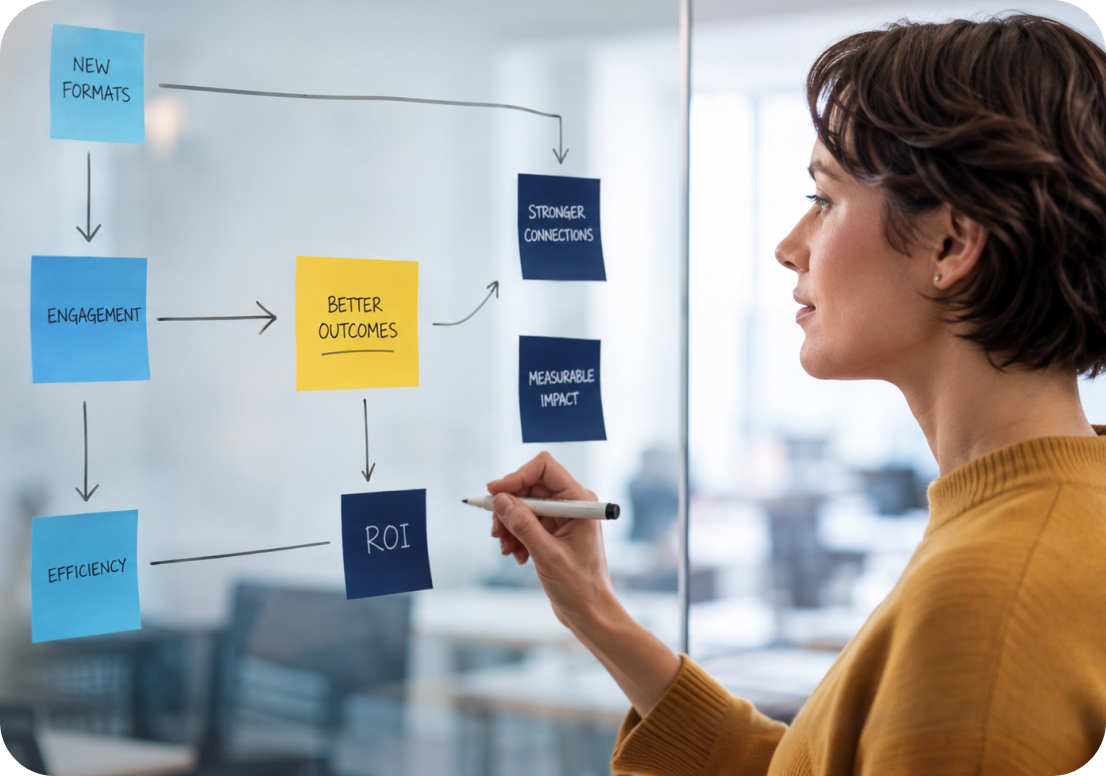
The ebook opened with a figure: 91% of organisers plan to introduce new meeting formats in the next twelve months. Six chapters later, the question is no longer whether to design a meetings strategy – it’s what to expect when you do. So what happens when meetings are designed?
Exhibitor lead quality stops being a function of luck
Stand position, foot traffic, scanner volume – these are the metrics of the previous generation. The metrics of a designed meetings programme are different – number of qualified conversations, conversion rate of meetings to follow-ups, attribution of pipeline to specific formats. Exhibitors who get this data in their post-event report rebook without resistance.
The 88% of organisers who believe pre-scheduled meetings would improve exhibitor experience and lead generation are describing exactly this shift.
Buyer experience becomes a strategic asset rather than a satisfaction score
A buyer who arrives with a relevant schedule, meets the right people and leaves with concrete next steps is a buyer who comes back – and tells others. Format design is what makes that connection real.
The 94% of organisers who recognise this connection are the ones treating attendee experience as a commercial input, not a service-level output.
Sponsorship and exhibitor revenue acquires new ceilings
Premium formats – concierge, hosted buyer, sponsored round tables – are sellable inventory with measurable outcomes attached. They give organisers something to charge for beyond stand space and logo placement and they give exhibitors something to renew against beyond goodwill.
The 82% of organisers who see pre-scheduled meetings as a route to new revenue are looking at this expansion directly.
These three outcomes are connected, not separate. Better lead quality drives exhibitor rebooking. Better buyer experience drives audience retention. Both make premium formats easier to sell. One intervention – format design – moves all three.
“
We have this combination of AI overload and people being inundated with content 24/7, not knowing what’s real and what’s not, alongside way less face-to-face time in our day-to-day jobs – less office time, less customer-facing time.
That dynamic is really driving events as a key marketing tool, as people are looking for human connection more than ever. If you’re the organiser capitalising on that, giving your customers a clear, scientific, data-driven way to measure their success, you’re on to something powerful. With Shoptalk’s Meetup programme, we’re combining the face-to-face serendipity and relationship-building of live events with the science of qualifying pipeline and lead generation.
“
For many years I think the industry spent more time concentrating on how to improve rebook than it did on improving what was going on at events.
I worry that the industry would drift back into that – everybody’s paying us lots of money, everyone’s really happy, growth is good, let’s just carry on doing the rebooks and driving it and not worry about what we’re delivering as a product.
7.1 What this requires
Three things, working together.
01
The right format mix for your event.
Not all seven formats and not just one. A deliberate combination of three or four, chosen against audience seniority, exhibitor type and commercial priority.
02
AI infrastructure that does the operational heavy lifting.
Matching, scheduling, recommendations, real-time adaptation, data capture – at a scale and precision that wasn’t available five years ago and that makes running multiple formats simultaneously operationally viable.
03
Human judgement where automation breaks.
Strategic format choice, senior audience curation, edge cases, exceptions. The work that scales poorly when automated and degrades the event when forced through an algorithm.
The platforms worth choosing are the ones that get this combination right.
7.2 What we’d suggest next
If the argument in this ebook has resonated, the most useful next step isn’t a demo. It’s a conversation about your event specifically.
The format mix that’s right for your audience, your exhibitor base and your commercial model isn’t something a generic platform tour can tell you.
It’s the output of a strategic discussion with people who’ve run events like yours before – and who can map the seven formats to your specific context, your specific revenue goals and your specific operational capacity for the next twelve months.
That’s the conversation we’d like to have. No product walkthrough, no feature checklist.
A working session on your meetings strategy – with the option to see the platform if and when that becomes relevant. The 91% of organisers planning new formats for the next twelve months are reaching for exactly this kind of intentionality. The events that get there first will set the standard for everyone else.

Unlock event ROI in 2026 with a full range of meeting formats
Self-Requested Meetings
Scheduled manually by exhibitors and visitors using AI recommendations
Speed Networking
Walk-in. Pre-matched. Scheduled automatically by the organiser based on mutual interests
Exhibitor Events
Sessions organised and run by exhibitors at their stands for many attendees
Hosted Buyer Programme
Buyer agent invites. Validation of buyers, assigning of benefits, document exchange. Pre-arranged meetings between selected buyers and exhibitors
Concierge Meetings
Scheduled semi-automatically by the organiser team on behalf of high-level participants
Board Meetings
One exhibitor presents to a board of buyers who move together as a single group
Round Tables
Each table has a topic and a moderator. Attendees are assigned by the AI algorithm to different tables based on their rated interests
Purpose-built meeting formats tailored to your event
Find the right one for you
Ready to design your own meetings strategy?
A working session on your meetings strategy — no product walkthrough, no feature checklist.