 Find out what's involved


The evolving exhibitor playbook: why businesses have moved beyond the booth
The exhibitor strategy has remained relatively straightforward for decades.
They invest in a stand, attract attendees and hope that leads convert into real opportunities.
That model is now obsolete and the exhibitor approach to events has fundamentally changed.
In the following guide we will explore:
- What was the traditional exhibitor approach to events and why was it flawed?
- The exhibitor mindset has evolved
- How AI and event data have changed the game
- Why the exhibitor stand is now a meeting hub – not the final destination
Exhibitors are designing a standard for how they approach events and organizers must meet their evolving needs.
What was the traditional exhibitor approach to events and why was it flawed?
The role of exhibiting companies in events has remained pretty much unchanged since their inception.
Those with the biggest and boldest stands usually attracted the most footfall and the hope would be that this would translate into a high number of leads.
But attracting attention does not equal meaningful engagement.
Having a stand that wows visitors does not inherently mean they will become worthwhile leads.
This has arguably the biggest flaw in the traditional exhibitor approach to events – it’s a poor way to measure true ROI.
Investing in stand design, merchandise and interactive experiences needs to be worth the expense with budgets increasingly under scrutiny.
Measuring by volume of interactions alone does not achieve this.
Exhibitors were often forced to rely on chance encounters rather than a proven formula backed by data.
The modern approach to exhibiting at events is quite different, and value is now far easier to evidence.
The exhibitor mindset has evolved
Exhibitors understand that the value of events is not about scanning the most badges on the day.
They now see it for what it is – an opportunity to nurture visitors that are most likely to convert into high-value opportunities.
The context of who is being engaged with matters far more than the volume – quality is being prioritized over quantity.
Exhibitors want the important information about attendees before meetings take place.
This includes what products/services they’re interested in, sessions they attended, industries they represent etc.
Such information enables exhibitors to determine the quality of connections before they happen.
This enables exhibitors to tailor their approaches to high-value meetings to form the best connections.
Where an event previously served as a place to capture leads, it now provides an opportunity to move candidates further along the marketing funnel.
This is now the exhibitor playbook that organizers are building their shows around.
How AI and event data have changed the game
Advancing event tech is what has truly made exhibitors rethink their entire approach towards shows.
Data has replaced guess work while AI-powered matchmaking has replaced hope.
Exhibitors want to know exactly who is attending and how they can be targeted – event tech providers are answering this need in kind.
Omnichannel dashboards enable this provide real-time data.
Rather than waiting until after an event to measure success, exhibitors can now monitor engagement as it happens and adjust their strategy on the fly.
AI also helps identify high-value prospects, recommend personalized outreach and automate follow-up – allowing teams to focus their efforts where they’re most likely to deliver results.
The result is a more strategic, data-driven exhibiting experience where every interaction can be measured, optimized and linked back to tangible business outcomes.
Why the exhibitor stand is now a meeting hub – not the final destination
The role of the exhibition stand has evolved dramatically.
It’s increasingly becoming the location where pre-arranged conversations take place – rather than serving as the primary place to discover new suppliers.
Buyers now arrive with a shortlist of companies they want to meet having already researched products, booked meetings and connected through the event app before stepping onto the show floor.
This shift has changed what exhibitors need from their stand.
The focus is on creating an environment that supports meaningful conversations and high-quality meetings instead of trying to attract as much footfall as possible.
Comfortable meeting spaces, live demonstrations and collaborative discussions have replaced the traditional hard sell.
In many ways, the stand has become the physical touch point in a much longer customer journey – one that begins long before the event opens and continues well after it closes.
To align with the modern exhibitor mindset and enable them to get the most out of your show – download our exhibitor manual.

There's more you might like
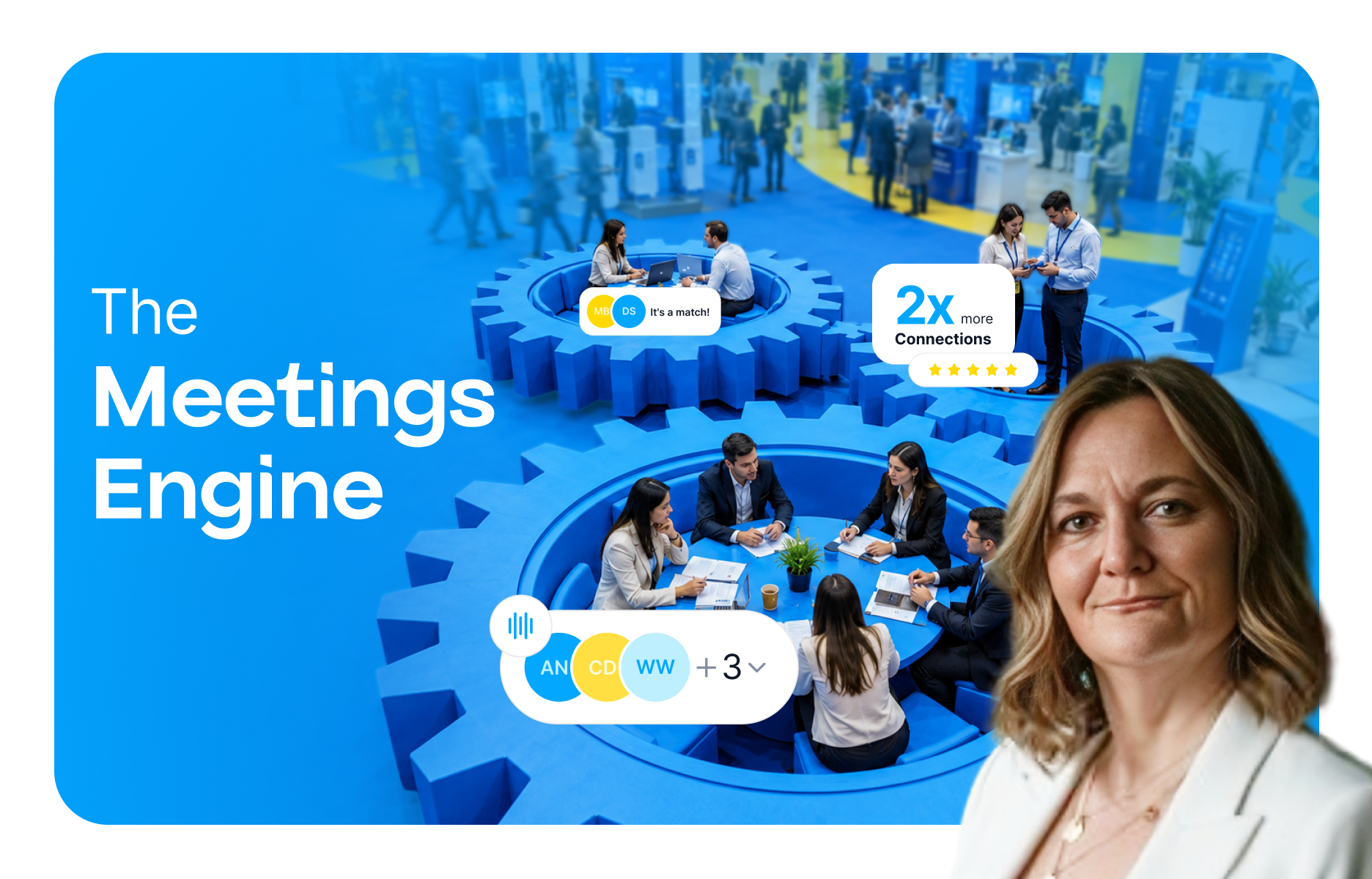
Cost per meeting – the number organisers can finally put next to Google
Footfall is no longer a number organisers can sell against digital channels, according to an events leader. Sharon Roessen, COO of Terrapinn, argues that the meeting is the only unit of event value that produces a figure a marketing director can compare with anything else they buy. Terrapinn runs around 90 events a year – ...

Jordan Yeates joins ExpoPlatform in new role
Jordan Yeates has joined event technology provider ExpoPlatform as its new Director of Engagement and Commercialisation. The appointment represents a significant step forward in the company’s goal to help clients elevate their event experiences and maximise digital ROI. Jordan makes the transition to the technology provider from major event organiser IMEX Group, where he previously ...

UFI reveals strong state of events despite Middle Eastern conflict
UFI has shown positive industry results in the latest edition of its Global Exhibition Barometer. It revealed that 90% of companies outside of the Gulf Cooperation Council (GCC) have seen minimal negative impact from the current situation in the Middle East. A total of 27% of global exhibition businesses also expect annual revenue growth of more ...