 Download the Event Tech Forecast now


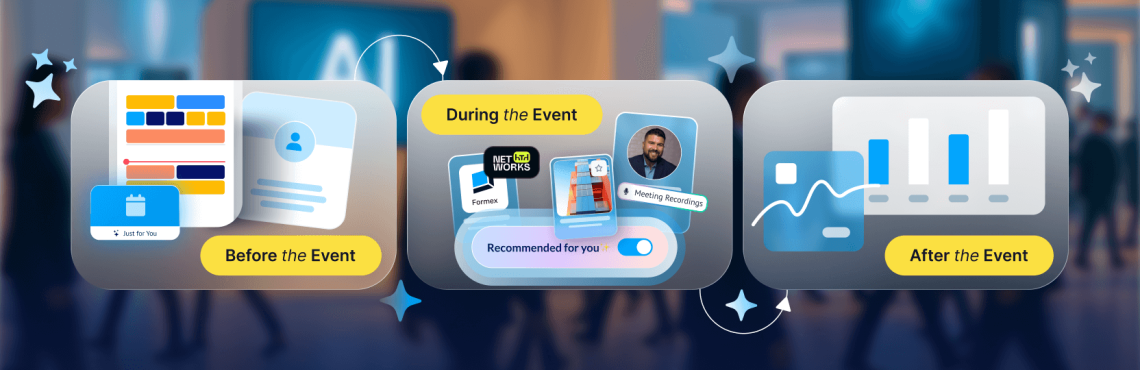
The AI Roadmap for Events 2026
The event show floor is alive with data – signals, interactions and choices – waiting to be transformed into insight.
AI is the invisible backbone of modern events, orchestrating everything from matchmaking to follow-up.
It’s the greatest enabler.
Your goal is not to make events more automated – but to make them more personal, impactful and profitable. Let’s explore how.
Before the event: From guesswork to precision planning
The most successful events do not start when the doors open. They start months earlier – with smart planning, personalized outreach and efficient scheduling.
Unfortunately, this is also where organizers traditionally waste the most time.
Manual scheduling, generic marketing and chaotic onboarding often lead to mismatched meetings, disengaged attendees and missed opportunities.
AI tools now act as digital co-pilots for organizers, replacing endless admin with insight-driven automation.
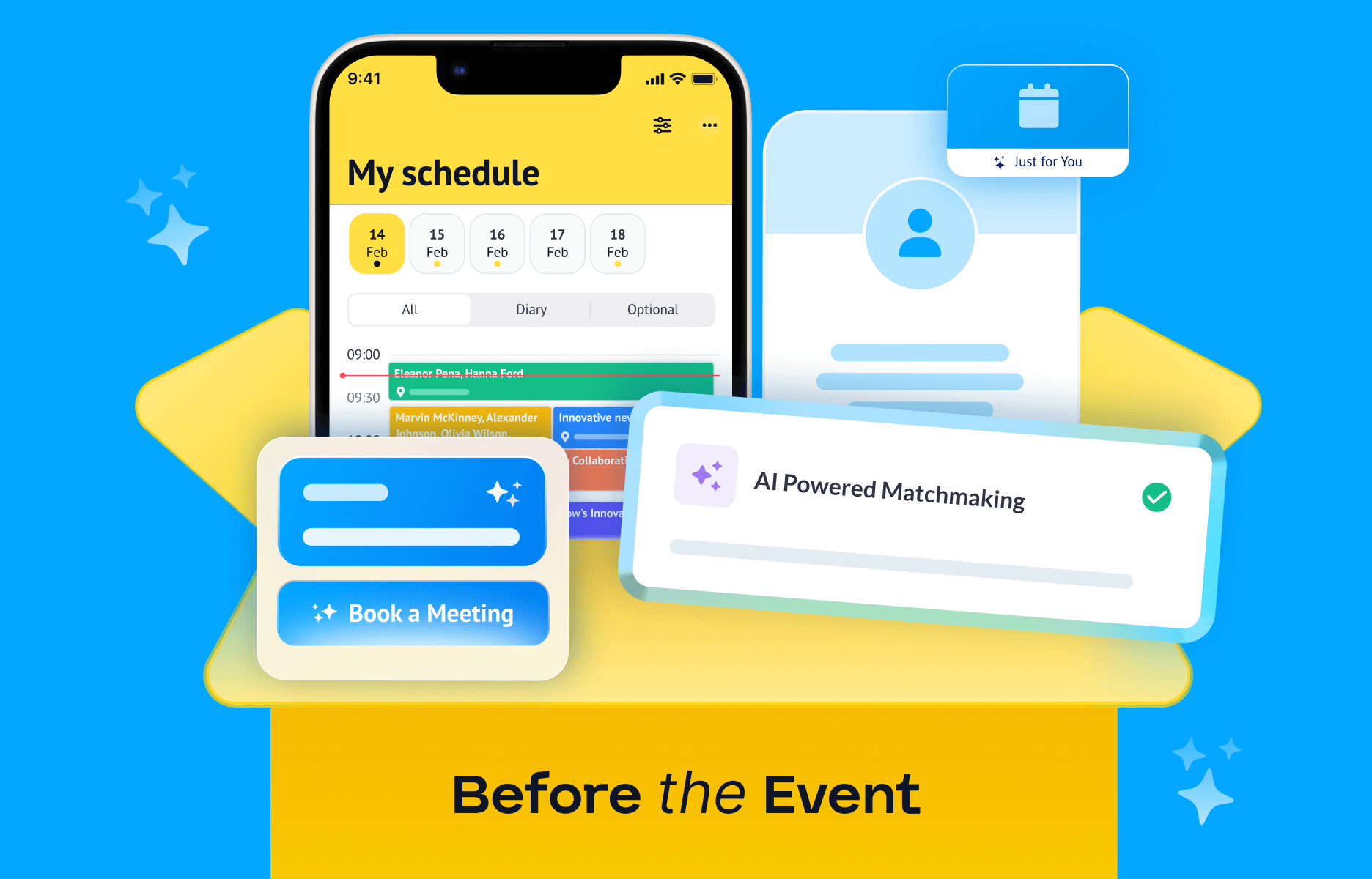
Agenda builder: Turning data into discovery
Attendees have faced dense event agendas – overwhelmed by choice and unsure which sessions would matter most. Organizers could not predict what content would resonate.
Now AI-powered agenda builders can analyse attendee profiles, interests and behavior to recommend personalized session plans. Each participant receives an agenda curated specifically for them, automatically updated as new sessions or speakers appear.
Impact:
- Boosts session attendance by surfacing the most relevant content.
- Provides organizers with insight into trending topics and underperforming sessions.
- Encourages deeper engagement and dwell time across the event platform.
Automated meeting scheduler: Goodbye, calendar chaos
Coordinating meetings between hundreds or thousands of participants is a logistical nightmare. Time zones clash, invites go missing and double-bookings become inevitable.
A smart meeting scheduler takes care of the chaos, so you don’t have to. It scans attendee calendars, preferences and availability to automatically find optimal meeting times, send invites and even handle rescheduling.
It can auto-convert favorites or matches into booked meetings – cutting manual steps between interest and action.
Impact:
- Saves organizers countless hours of scheduling.
- Increases the number of successful connections per event.
- Eliminates friction for attendees, who simply show up at the right time, every time.
Matchmaking: Where data turns into chemistry
Traditional networking can feel like professional roulette. Organizers rely on random introductions and attendees end up wasting valuable time meeting the wrong people.
But an intelligent matchmaking engine transforms registration data, interests and intent signals into personalized connection recommendations.
It builds smart shortlists of people each participant should meet using algorithms that evaluate compatibility, behavior and even past event data.
Impact:
- Improves lead quality and buyer-exhibitor satisfaction.
- Saves organizers time by automating pairing and schedule generation.
- Turns networking from chance encounters into measurable business outcomes.
The bigger picture: AI for event Marketing and forecasting
AI tools are also helping organizers:
- Predict registration trends using historical data and audience behavior.
- Optimize pricing and promotions through predictive analytics.
- Generate personalized content using generative AI for emails, ads and campaigns.
AI ensures the audience is right, the schedule is optimized and the message lands perfectly – before an event even begins.
During the event: Making every interaction intelligent
It’s showtime – this is where AI’s role becomes even more visible and valuable.
Even the most well-planned event can feel chaotic in real time. Attendees miss sessions. Exhibitors struggle to find buyers. Organizers can’t keep up with what’s working and what’s not.
Now the right AI can turn data into direction – anticipating attendee needs, improving networking outcomes and capturing insights automatically.
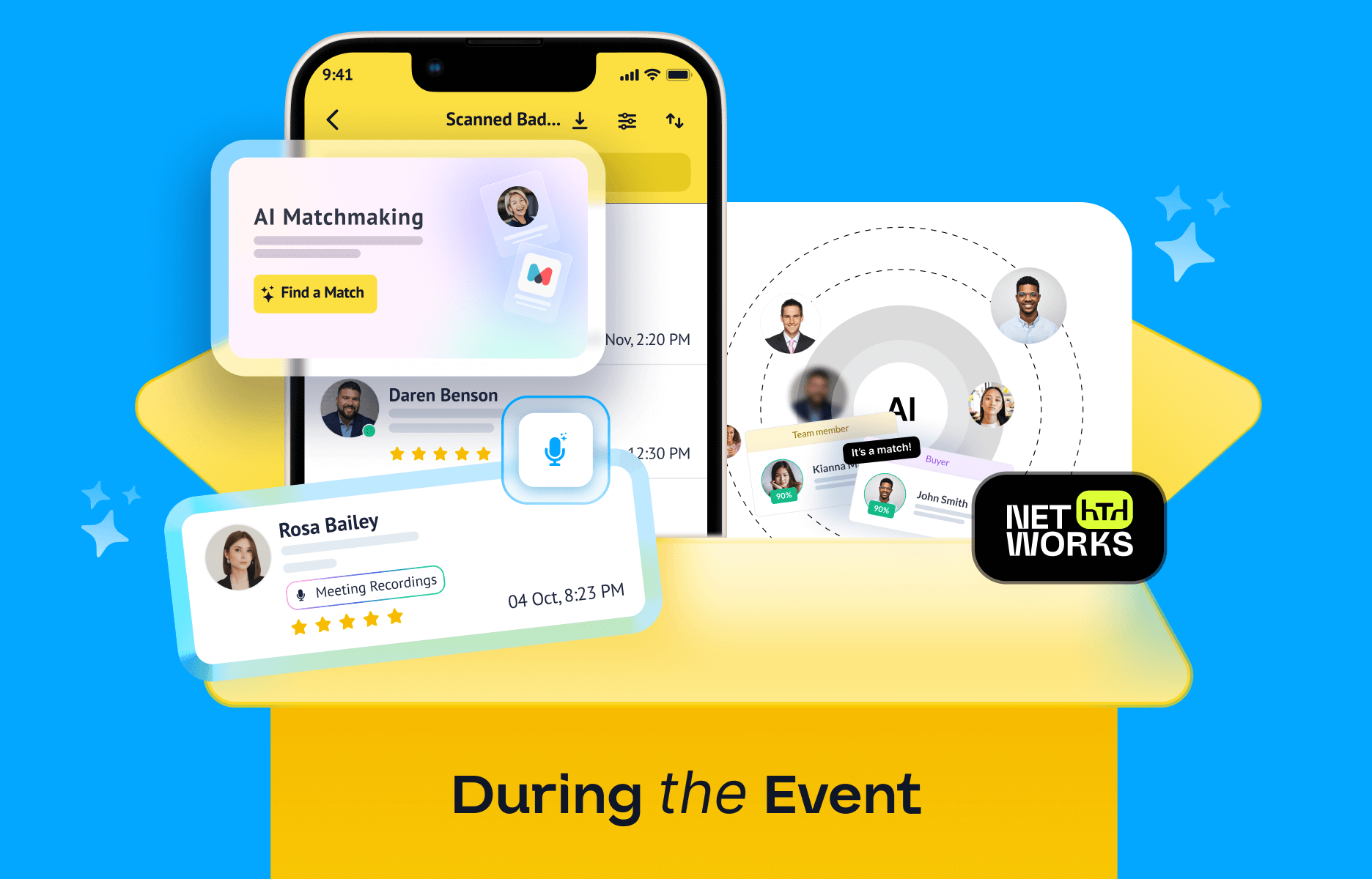
Intelligent speed networking: Making the right connections, faster
Random networking wastes time and drains energy. Event participants want meaningful, relevant interactions – not a lottery of business cards.
An intelligent speed networking algorithm analyzes participant data, interests and intent to create high-quality, short-format meetings that actually matter.
Impact:
- Increases the quality and conversion rate of meetings.
- Ensures no one wastes time in mismatched sessions.
- Provides organizers with engagement analytics to measure success.
Think of it as matchmaking, minus the heartbreak.
AI Meeting Note Taker: Never lose a great leads again
How many great leads have been lost to forgotten follow-ups or messy handwritten notes? In business events, memory loss is expensive. And too many leads are lost on the show floor.
The AI Meeting Note Taker listens, transcribes and summarizes conversations in real time. It identifies key points, action items and outcomes – automatically storing them for both participants.
Impact:
- Ensures accurate records for post-event follow-ups.
- Strengthens buyer-seller relationships through clear documentation.
- Saves hours of manual reporting.
- Qualifies leads and streamlines follow-ups
The only thing worse than a bad meeting is a good meeting you forgot.
Engagement recommender: The right nudge at the right time
Even the most enthusiastic attendee can lose track of their schedule amid dozens of sessions, meetings and social events.
An engagement recommender proactively reminds attendees about upcoming sessions, deadlines or networking opportunities – even suggesting new ones based on interests.
Impact:
- Increases session attendance and overall engagement.
- Reduces no-shows and improves event flow.
- Helps organizers boost participation without manual reminders.
Real-time insights and emotion tracking
The events digital landscape is expanding. Emerging AI systems now analyze live attendee behavior:
- Facial recognition and sentiment analysis detect crowd mood, helping organizers adjust experiences dynamically.
- Heat maps and movement tracking reveal popular zones, enabling smarter traffic management.
- Speech analytics in Q&A sessions identify trending questions or common pain points.
After the event: Turning data into decisions
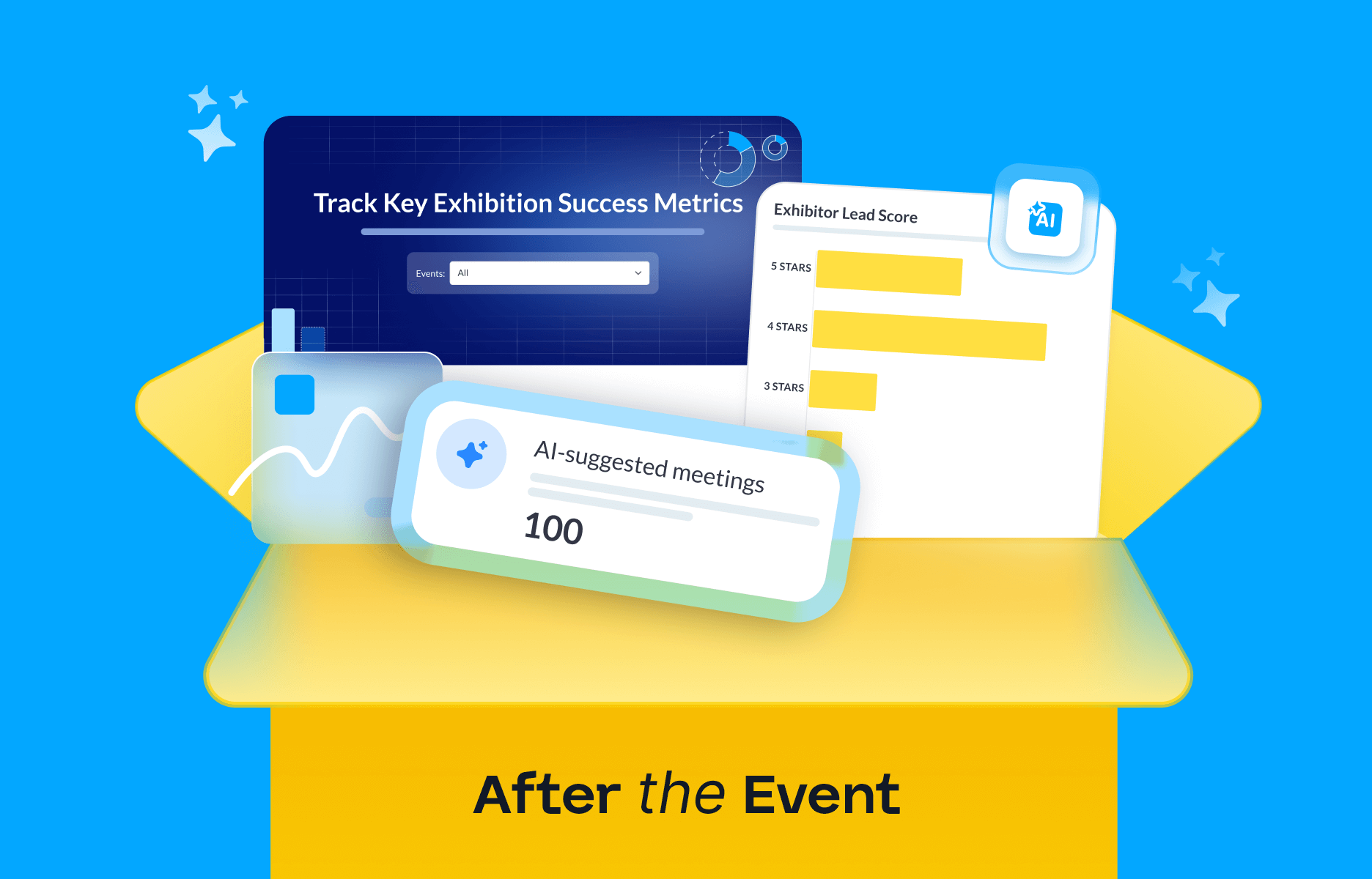
AI’s real superpower lies in what happens after the event. It collates feedback, analyzes engagement and highlights insights organizers might never spot manually:
- Which session topics drove the most leads?
- Which exhibitor meetings resulted in sales?
- Which attendee personas are most likely to return next year?
And so … much … more. AI answers these questions in minutes – not weeks.
The goal is predictive, not reactive
AI is not here to replace event professionals – it’s here to amplify them.
Organizers still provide the strategy, creativity and empathy that make events meaningful.
AI gives them superpowers – the ability to see patterns, anticipate needs and personalize experiences at scale.
This era of event management is not about technology for technology’s sake. It’s about human experiences powered by intelligent systems – where the best events feel both effortless and unforgettable.
As you can see, the future is not coming – it’s already scanning badges, scheduling meetings and taking notes.
That’s a future every organizer can get excited about.
There's more you might like
Out-of-the-box AI ‘not good enough’ for eventprofs
Generic tools don’t cut it for the specialized world of B2B exhibitions and organizers must now cross the “second door” of personalization, according to an industry expert. Stephan Forseilles, chief digital officer at Easyfairs, argues the market has moved past the era of asking “how” to do things and is now stuck wondering which tools ...
Exhibitions face innovation ‘perception gap’ as AI reality sets in
Exhibition businesses appear to be navigating a “notable” disconnect between public innovation claims and actual digital adoption, according to Event Tech Forecast findings. New global survey data in the report by ExpoPlatform reveals 74% of firms position themselves as leading innovators, while 45% admit artificial intelligence has yet to meaningfully impact their business models. Kai ...
The key elements that define AI-powered events
AI-powered technology is constantly evolving to meet the priorities of event professionals. It’s triggered a shift in how events enable businesses to meet their goals – even impacting the amount of marketing budget allocated to live shows. Production, engagement, data analysis and overall experiences are improving – but what are the key elements of an ...