 Find out what's involved



‘AI is a double-edged sword for event organisers’
AI is worth more to organisers as a private tool than as a public shop window, according to an events chief.
Simon Foster, group CEO of Arc Network, argues the organisers who come out of this cycle ahead will be the ones who keep their community data behind a wall and spend the technology on connecting people rather than publishing to it.
Arc is a London-based B2B events, data and media group backed by EagleTree Capital, with portfolios spanning HR technology, agriculture and food, financial services and education technology.
Simon said: “AI for us is a double-edged sword. Yes, we want to protect and keep our insight, our content and what we’re doing – our proprietary things – behind our walls and behind our moat. But on the other hand, AI gives us a huge amount of opportunity to enhance what we’re doing for the clients, drive how we can connect people and move things through.”
What the wall is protecting
The asset inside the moat is not the content library, it is the behaviour attached to it.
Simon – who is an expert contributor in the Meetings Engine ebook – draws a hard line between data and insight: data is who somebody is and what they do for a living, insight is what they have actually been reading, attending and clicking across a year.
Arc’s position is that this only holds if the data is proprietary rather than bought, because a purchased list tells an organiser nothing a competitor cannot also buy.
He added: “We can then look across our wider database and both enhance and enrich the information you’re getting, which the customer will pay for, but also we can do look-alikes. We can drive those. That becomes a very nice virtuous circle because the more we do and the more we can see what people are doing, the more we can do that. There’s a virtuous circle of revenue and opportunity as well as the virtuous circle of data.”
That is the commercial case for the wall in one paragraph – enrichment sold to the exhibitor after the show and look-alike audiences built from the best leads of people who never attended.
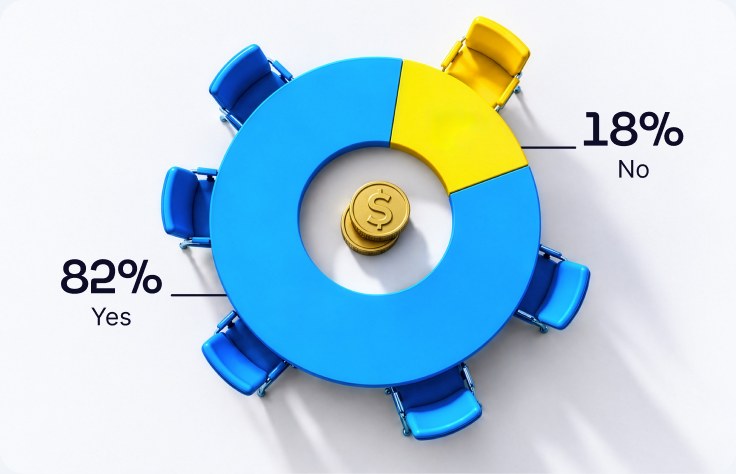
A total of 82% of organisers in the research behind ExpoPlatform’s meeting formats study see meeting formats as a route to new revenue – and the enrichment loop is what extends that revenue past the closing bell.
The year the hesitation ended
Inside Arc the shift has been fast – moving in about twelve months from uncertainty about AI to structured use across sales support, content development, coding and board reporting.
What has not moved is Simon’s view of where the judgement still has to sit.
He added: “Meeting planning is a tough thing to do – it involves some intuition. This is probably where AI will help us even more. Even now with all the models that are out there, it still requires some human intervention and some management – maybe it always will.”
Serendipity is wonderful but unprovable
The reason any of this matters commercially is that the old model could never show its work.
He said: “In the old days, you rented a big hall, you put a load of booths in, put in a load of people and hope that they all meet. Serendipity was wonderful. Yes, we created it and did things and made sure the right people were there, but then you were still left trying to judge the ROI.”
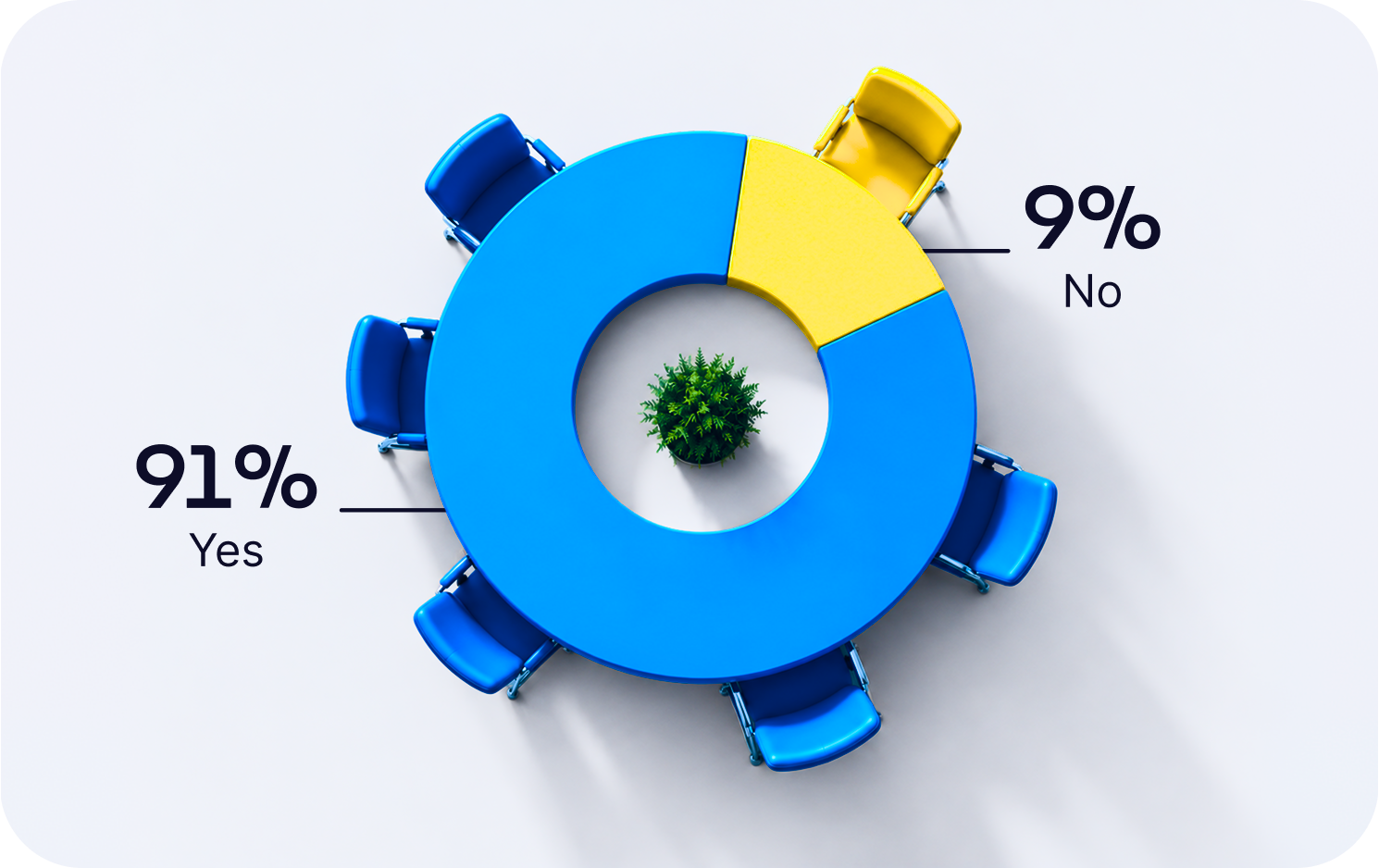
Judging is the operative word and the industry is now trying to replace it with counting – the same research shows 91% of organisers planning to introduce new meeting formats in the next twelve months.
Matchmaking, hosted buyer programmes and other planned meetings give an organiser a number to report rather than a footfall figure and a hopeful conversation.
Simon added: “Events traditionally are very much at the top of the funnel. We very much want to make sure that we can help customers all the way down to the bottom of the funnel. It’s not just ‘please take a booth and good luck and we’ll see how many people you get.’ It’s much more about being able to show them and enhance the data they get.”
Nobody sells the whole thing
The obstacle he points to is not organiser appetite, it is the supplier market.
No single technology provider, in his view, handles registration, floor planning and full meeting management as one package, which leaves organisers stitching together systems never designed to hand off to each other.
The damage lands at the exhibitor end, where lead capture tools still see low take-up – a mix of cultural resistance, CRM integrations that refuse to standardise, too many interfaces at one show and exhibitors who are hard to train because they believe they already know how.
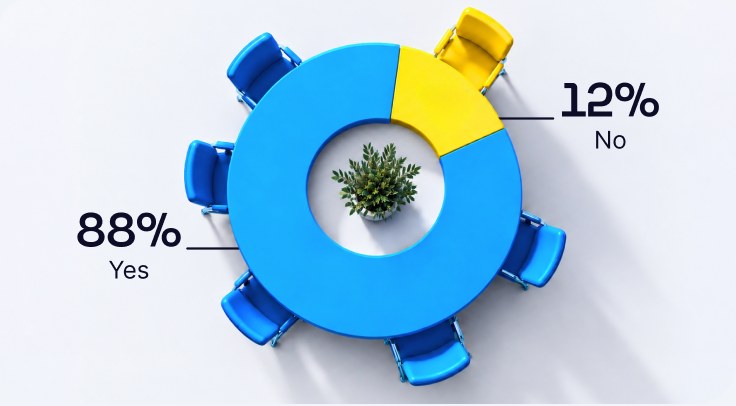
A total of 88% of organisers in the same research point to exhibitor experience and lead generation as the area formats have to fix, which is precisely where the tooling is thinnest.
The rebook trap
Simon’s closing worry has nothing to do with technology, he is instead concerned organisers maintain a focus on keeping people coming back rather than improving event offerings.
He said: “For many years I think the industry spent more time concentrating on how to improve rebook than it did on improving what was going on at events. I worry that the industry would drift back into that – everybody’s paying us lots of money, everyone’s really happy, growth is good, let’s just carry on doing the rebooks and driving it and not worry about what we’re delivering as a product.”
His thesis is that the pre-pandemic model was brittle rather than strong, held up by rebooking momentum while net promoter scores went negative underneath it.
For organisers, the test Simon sets is narrow enough to apply this season.
A show that knows what its audience has been reading, can prove who met whom and keeps that intelligence on its own side of the wall has something to sell after the hall empties. A show that hands the same intelligence to everybody else is renting space and hoping.
CEO of Arc Network Simon Foster is an expert contributor to the Meetings Engine ebook. Get access now to uncover connection strategies, revenue options, new formats and the technology behind it all.

There's more you might like
AI surge has trigger new interest in live events – Paul Miller
The rise of AI and deepfakes has seen a surge in CMO interest in live events, according to an events industry leader. Paul Miller, CEO of Forge, believes this trend is running alongside an increasing demand for targeted meeting programmes they are willing to pay for. Forge runs around 160 events and was formed when ...

Out-of-the-box AI ‘not good enough’ for eventprofs
Generic tools don’t cut it for the specialized world of B2B exhibitions and organizers must now cross the “second door” of personalization, according to an industry expert. Stephan Forseilles, chief digital officer at Easyfairs, argues the market has moved past the era of asking “how” to do things and is now stuck wondering which tools ...

The AI Roadmap for Events 2026
The event show floor is alive with data – signals, interactions and choices – waiting to be transformed into insight. AI is the invisible backbone of modern events, orchestrating everything from matchmaking to follow-up. It’s the greatest enabler. Your goal is not to make events more automated – but to make them more personal, impactful ...