 Find out what's involved


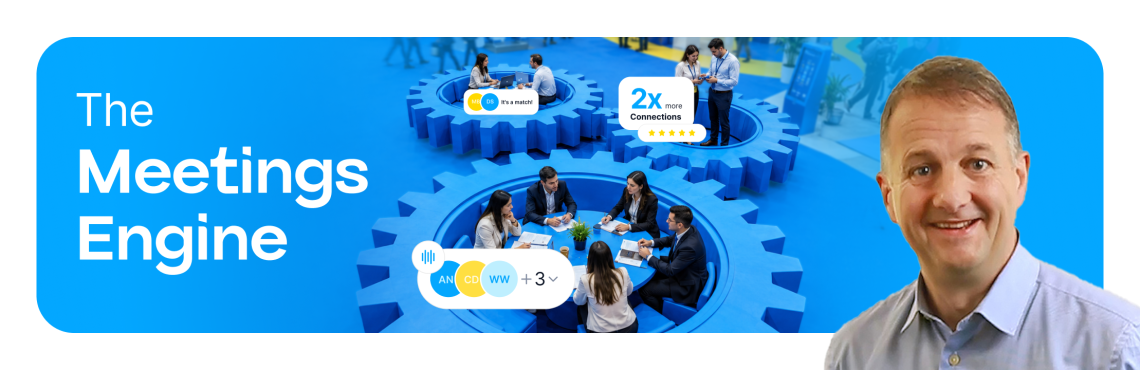
AI surge has trigger new interest in live events – Paul Miller
The rise of AI and deepfakes has seen a surge in CMO interest in live events, according to an events industry leader.
Paul Miller, CEO of Forge, believes this trend is running alongside an increasing demand for targeted meeting programmes they are willing to pay for.
Forge runs around 160 events and was formed when Emerald and Questex combined under Apollo-managed funds in July 2026, with a database of more than six million engaged professionals behind it.
He said: “At the 50,000 foot level the realisation – from a marketer’s budgets perspective – is that in-real-life is an incredibly trust engendering medium.
“When you don’t know whether a call is from an AI agent or what you’re seeing is a fake video, an in-real-life engagement is what can be trusted. Then CMOs get attracted to the in-real-life kind of marketing medium.”
That trust does not translate into a single request for a bigger stand – it arrives as a demand for range.
He added: “Some could be, ‘Hey, we want to be at a trade show just to raise our presence and we want to set up a shingle and have people understand we are a brand in this marketplace.’
“But some could be, ‘Look, there are 12 people who are absolutely key to us in these 10 cities and we’d love to have an exclusive dinner that we’re willing to sponsor with a speaker so we can get to know these 12 people across 10 cities – 120 really well-qualified accounts.'”
Paul – who is an expert contributor to the Meetings Engine ebook – frames the shift through the buyer journey rather than through the floorplan.
He added: “If you look at the buyer’s journey you go from awareness to consideration to buying. Each of those areas can have a different need in a real-life setting and each can happen at one event
“Event organisers realise that and marketers are saying, ‘We’re not just content to do one of these. We want the option to do all of the above’.”
All of the above
Research behind ExpoPlatform’s study shows the industry moving in the same direction, with 91% of organisers planning to introduce new meeting formats in the next twelve months.
Paul puts his own business at the top of that range.
He said: “We’ve introduced the more intimate executive dinners. At 100% of our events we’ve introduced one-to-one meeting formats. So people are in the room, they sign up to meet people and they go at a selected time to meet them.”
The sledgehammer and the scalpel
Hosted buyer programmes are the clearest commercial expression of the shift and he is blunt about why they work.
Paul said: “It would be double opted in, very highly qualified buyers who we would host – in some cases fully host the flights and the hotels. They commit to a certain amount of meetings and then the sellers pay for the privilege of having that exposure to people that are qualified to buy their products.”
The mechanic itself is not new, but it is spreading into formats that were never built for it.
Conferences now carry matched meetings without the full hosting and large trade shows are carving out sections of the show floor where attendees are matched with suppliers and have to complete a set number of meetings to qualify for a free pass.
Where Paul sees the real commercial upside is in how those meetings are priced.
He added: “You can have 20 meetings, 14 meetings, 8 meetings. That’s the sort of sledgehammer approach.
“The more sophisticated approach is that you can have people that have qualified themselves as ready to buy in the next 30 days, or you could meet people that are ready to buy in the next three months, or you could meet people who are kicking the tires but they’re considering a new solution.
“You’ve just got to make sure that your buyers are in fact really ready to buy and that they’re not just looking for a free trip”
A total of 82% of organisers in the same study see meeting formats as a route to new revenue and the value of a ready-to-buy tier collapses the moment a seller works out that the buyer opposite them was there for the flights.
What they say versus what they read
Self-qualification is where most matchmaking still stops and Paul treats it as the floor rather than the ceiling.
Paul said: “At one end you’ve got people who are filling out a whole set of questions on ‘Where are you? Are you interested in this product? How far are you close to making a purchase? Are you evaluating?’
“One end is the self-qualification opt-in. That’s traditional, in a way. The next opportunity is that you start to bring in AI and in our case you start to layer in intuition – which says, this person says they’re interested in evaluating AI solutions in drug discovery, but actually their last six weeks of content consumption has been about AI in drug manufacturing.
“Although they’re saying this, we think they’re interested in a manufacturing solution. So therefore, as a contract manufacturer, you may want to meet this person.”
He calls the output intelligent meetings and the second example he reaches for is deliberately mundane.
Paul added: “Instead of it being you telling me you’re interested in a new laptop, it’s like, ‘Actually what you’ve really been consuming from a content perspective is mobile security software.’
“So we’re going to encourage you down that road and we think you should meet some security software solution providers. You then say, ‘Yeah, actually, that is what I’m interested in right now.'”
The distinction matters because it changes what a meeting programme is drawing on.
A form captures a buyer at one moment, usually while they are trying to finish registering.
Content consumption captures them across 365 days and it captures drift – the gap between the category a buyer thinks they are shopping in and the one they are actually reading about. Often, the content consumed in the 6 weeks leading to the event is a great indicator of purchasing intent or, at least, interest.
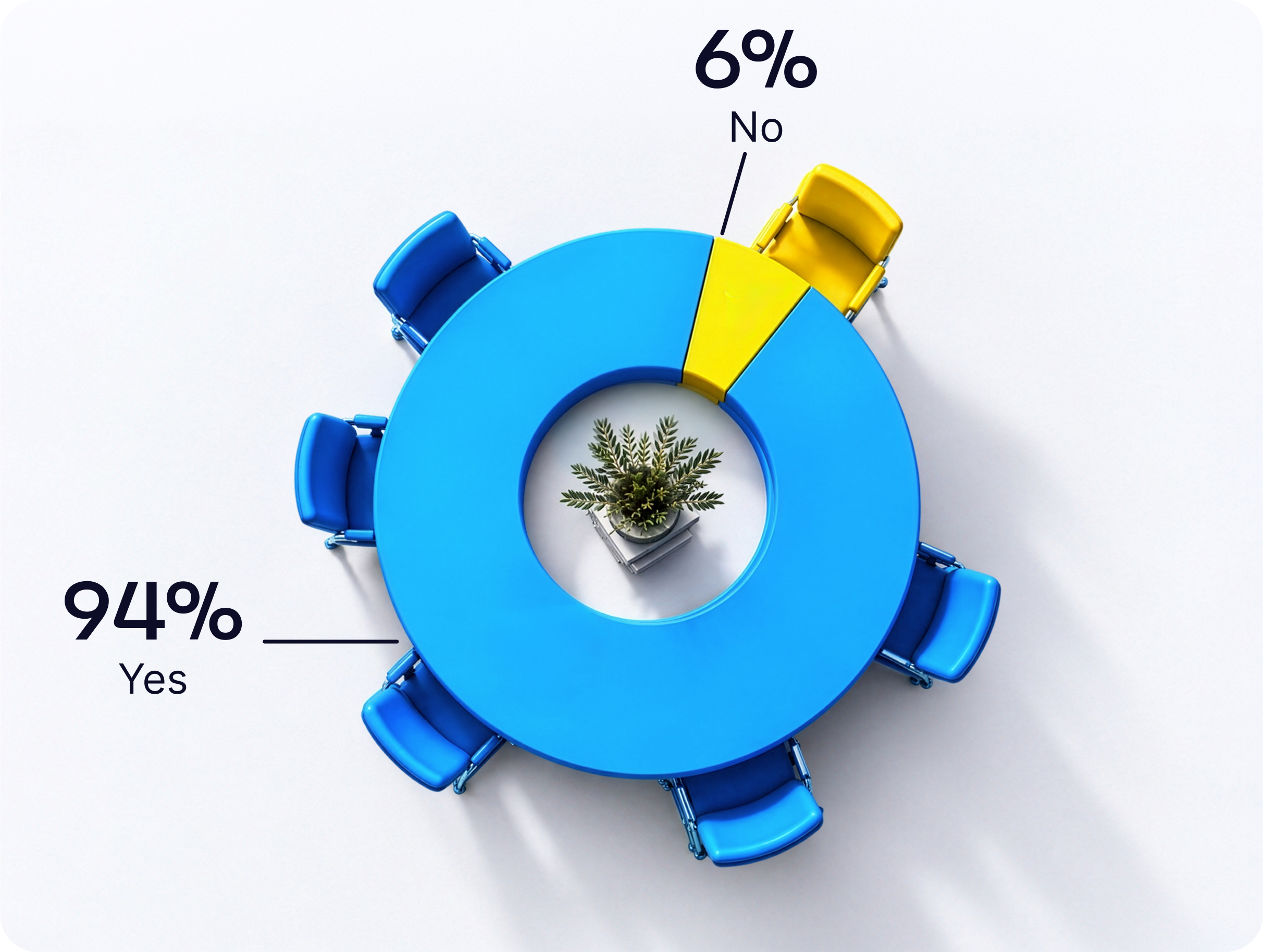
A total of 94% of organisers in the meeting formats research identify buyer and visitor experience as the biggest prize in getting formats right and relevance is what that experience is made of.
The database is the business
None of this works without something to read the signal from, which is why Paul’s answer on content sounds less like a media strategy and more like an infrastructure one.
Paul said: “They attract an audience that we then get to opt into our database – sign up for newsletter, sign up for webinar. That’s almost a byproduct, frankly, but it’s really important.
“It’s probably the most important thing for our entire business – we have six million plus names in our database of engaged professionals. So that’s golden for us.”
The journalism that fills it is not decorative.
Paul describes reporters breaking niche news every morning that the major titles no longer have the staff to cover and he is explicit that where AI touches any of it, the label goes on.
He added: “We are, in maybe a counterintuitive way, doubling down on the profession of journalism.”
Content teams are held at vertical level rather than centralised – life sciences, wellness, hospitality, travel, healthcare – and sized to the news velocity of each market.
In fast-moving sectors that means a team of 20 making sense of the day, while in slower ones it can mean a single person, with formats such as product directories or post-event round-ups doing the work that reporting would do elsewhere.
You can’t just throw people in a hall
Paul’s closing argument is the one organisers will feel first in their renewal conversations.
More marketing money is heading towards live events and it is arriving with conditions attached.
He said: “More and more chief marketing officers are going to be looking more and more at live events. And the good news about that is that there’s more money coming into the live event marketplace.
“The shadow side of it is that chief marketing officers have quite serious demands on return on investments for that money. So, how many MQLs did you provide us? How many SQLs did you provide?”
His conclusion is a warning dressed as optimism.
He added: “It’s a really exciting time, but we’ve got to up our game as an industry. You can’t just throw people in a hall and say, ‘There you go, ROI,’ because people are going to say, ‘Well, I didn’t get the ROI.’ It just moves us up into the experiential stack, the different format stack, the ‘how do I guarantee better value’.
“These are good times on the whole. Really good times. But you’ve got to do it. They’re not just going to throw money at you and say, ‘Well done, you’re an event.'”
For organisers, the practical implication is narrow enough to act on.
The meeting programme is no longer a scheduling problem to be solved in the fortnight before doors open.
It is a data problem that runs all year and the organisers who can prove they know what a buyer is actually in the market for will be the ones setting the price.
There's more you might like
‘AI is a double-edged sword for event organisers’
AI is worth more to organisers as a private tool than as a public shop window, according to an events chief. Simon Foster, group CEO of Arc Network, argues the organisers who come out of this cycle ahead will be the ones who keep their community data behind a wall and spend the technology on ...

Out-of-the-box AI ‘not good enough’ for eventprofs
Generic tools don’t cut it for the specialized world of B2B exhibitions and organizers must now cross the “second door” of personalization, according to an industry expert. Stephan Forseilles, chief digital officer at Easyfairs, argues the market has moved past the era of asking “how” to do things and is now stuck wondering which tools ...

The AI Roadmap for Events 2026
The event show floor is alive with data – signals, interactions and choices – waiting to be transformed into insight. AI is the invisible backbone of modern events, orchestrating everything from matchmaking to follow-up. It’s the greatest enabler. Your goal is not to make events more automated – but to make them more personal, impactful ...